
Many writers get confused when deciding whether to write months, or month’s, vs months’. Although these words look similar, each has a different grammar purpose. Knowing the difference can help you avoid common grammar mistakes, improve your English writing, and use apostrophe rules correctly in emails, school assignments, business documents, and everyday conversations.
In this guide, you’ll learn the meaning of month, months, month’s, and months’, along with simple grammar rules, practical sentence examples, and easy tips to remember when each form is correct.
We’ll also explain the difference between month’s vs months, answer questions like “Does months need an apostrophe?” and “When should you use month’s?”, and clear up the confusion once and for all. By the end, you’ll feel confident using every form correctly in any situation.
Quick Answer
Months is the plural form of month and refers to more than one month. Month’s is the singular possessive form, showing that something belongs to one month (for example, one month’s rent). Months’ is the plural possessive form, showing ownership by multiple months (for example, two months’ notice). The correct choice depends on whether you’re expressing plurality or possession.
What Does “Month” Mean?
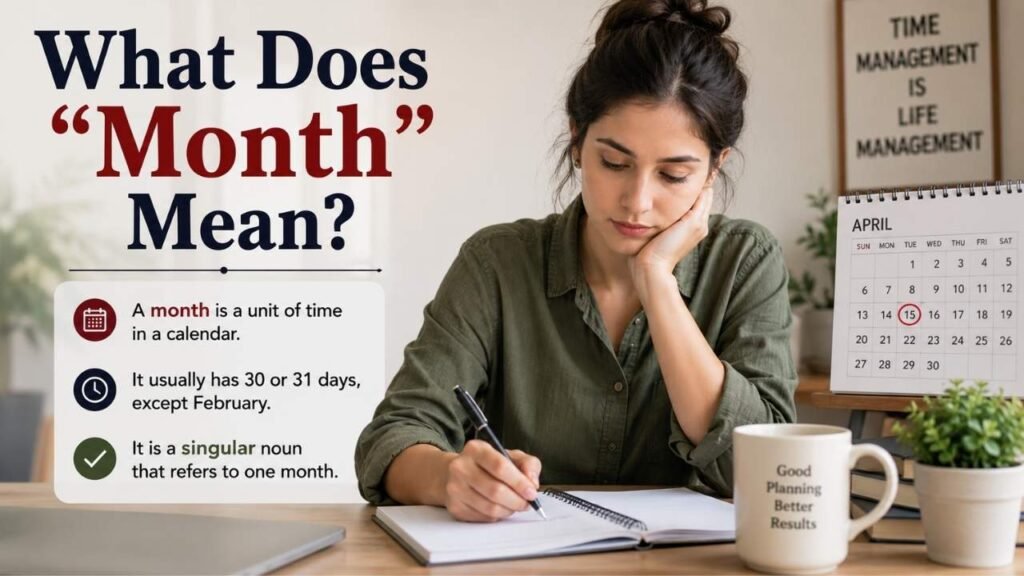
A month is a singular noun that describes one unit of time in a calendar. Most calendar months have 30 or 31 days, while February usually has 28 or 29 days.
You use month whenever you are talking about one month, not several. It does not need an apostrophe because it simply names a period of time and does not show ownership. Understanding the meaning of month is the first step before learning months, month’s, and months’.
Once you know the grammar rules for singular and plural nouns, the difference becomes much easier. If you’re also interested in word endings, our guide on Suffix Less explains how suffixes can change a word’s meaning in English.
What Does “Months” Mean?
Months is the plural form of month. Use it whenever you are talking about more than one month without showing ownership. For example, “The project lasted three months” or “She traveled for six months.” In these sentences, months simply tells us how many months there are, so no apostrophe is needed.
Many people ask, “Does months need an apostrophe?” The answer is no unless the word shows possession.
Knowing the difference between month vs months helps you avoid common grammar mistakes and improve your English writing. This simple rule is useful in school assignments, emails, reports, and everyday conversations where correct usage matters.
What Does “Month’s” Mean?
Month’s is the singular possessive form of month. It shows that one month owns or is connected to something. The apostrophe comes before the s because the ownership belongs to a single month.
For example, “one month’s rent,” “last month’s report,” and “a month’s salary” are all correct. If you are wondering when to use month’s, remember this simple rule: use it only when referring to one month that possesses something.
This is one of the most important apostrophe rules in English grammar. Similar grammar comparisons, like Inactivation vs Deactivation, also show how small differences in words can completely change their meaning and correct usage.
What Does “Months'” Mean?
Months’ is the plural possessive form of months. It shows that more than one month owns or is connected to something. The apostrophe comes after the s because the noun is already plural.
For example, “two months’ notice,” “three months’ experience,” and “six months’ rent” are all correct. Many learners confuse months’ with month’s, but the rule is simple. If the ownership belongs to one month, use month’s. If it belongs to multiple months, use months’.
Learning the difference between month’s vs months’ will improve your grammar, strengthen your writing skills, and help you avoid common punctuation errors in both professional and everyday writing.
Months vs Month’s vs Months’: Side-by-Side Comparison Table
The easiest way to understand months, month’s, and months’ is to compare them together. Although they look similar, each form has a different grammar purpose. Months is the plural form and simply means more than one month.
Month’s is the singular possessive form, showing that something belongs to one month. Months’ is the plural possessive form, showing ownership by multiple months. If you’re ever unsure whether to use months or month’s, ask yourself two questions:
Am I talking about one month or several? and Is there ownership? These simple checks will help you choose the correct word and avoid common grammar mistakes in everyday English writing.
| Word | Meaning | Example |
| Month | One month | I will return in one month. |
| Months | More than one month | We traveled for three months. |
| Month’s | Belonging to one month | One month’s rent is due today. |
| Months’ | Belonging to multiple months | The company requires two months’ notice. |
Grammar Rules You Must Know Before Using Apostrophes
Learning a few basic apostrophe rules makes it much easier to choose the correct form. Use month when talking about one month without ownership. Use months when referring to two or more months.
Choose month’s when one month owns something, such as one month’s salary or last month’s report. Use months’ when several months share ownership, like three months’ experience or six months’ rent. Many people ask, “Does months need an apostrophe?” The answer is only if it shows possession. These grammar rules apply in academic writing, business writing, emails, and everyday conversations, helping you write with confidence and accuracy.
Real-Life Sentence Examples for Every Form
Seeing each word in a sentence is one of the best ways to remember the difference between month, months, month’s, and months’. Here are some easy examples. Month: The course lasts one month.
Months: She studied for four months before the exam. Month’s: I received one month’s pay after leaving my job. Months’: Employees must give two months’ notice before resigning.
These examples show the correct plural form, singular possessive, and plural possessive in everyday situations. Reading and writing similar sentences will improve your English grammar, strengthen your understanding of apostrophe rules, and make it easier to use the correct form naturally.
Common Mistakes People Make (And How to Avoid Them)
Many writers mix up months, month’s, and months’ because they focus on the apostrophe instead of the meaning. One common mistake is writing “three month’s” instead of “three months.”
Another is writing “two month’s notice” instead of the correct “two months’ notice.” Remember that months is only the plural form, while month’s and months’ both show possession.
Before writing, ask yourself whether the sentence expresses ownership. If it does, decide whether the owner is one month or multiple months. This simple habit will help you avoid common punctuation mistakes, improve your English writing, and use correct grammar in every situation.
Special Time Expressions: One Month’s Notice, Two Months’ Notice & More
Some expressions appear so often that they deserve special attention. One month’s notice, two months’ notice, three months’ salary, six months’ experience, and a month’s leave all follow standard English grammar rules. If the expression refers to one month, use month’s. If it refers to more than one month, use months’.
However, if you are only talking about a length of time, use months without an apostrophe, as in “The project lasted six months.” Understanding these common time expressions helps you write correctly in contracts, job applications, business emails, and formal documents where accurate punctuation and grammar are especially important.
Easy Memory Tricks to Never Confuse These Forms Again
You don’t have to memorize difficult grammar rules to remember these words. Use this simple trick: No ownership = months. One owner = month’s. More than one owner = months’.
Think about whether the sentence shows possession before adding an apostrophe. If it doesn’t, simply use months. If one month owns something, choose month’s. If several months own something, choose months’.
Reading your sentence aloud can also help you spot mistakes. These easy memory tips make it simple to understand month’s vs months, avoid common grammar mistakes, and improve your confidence in English writing. With regular practice, choosing the correct form will soon become natural.
FAQs
Is it months or month’s?
Use months for the plural form and month’s for the singular possessive form.
Does months need an apostrophe?
No. Months only needs an apostrophe when it becomes months’, the plural possessive form.
What is the difference between month’s and months’?
Month’s belongs to one month, while months’ belongs to multiple months.
Is “one month’s notice” correct?
Yes. Because the notice relates to one month, month’s is the correct form.
Is “two months’ notice” correct?
Yes. Since it refers to two months, use the plural possessive form months’.
What is the plural of month?
The correct plural form is months.
How can I remember the difference?
Remember this rule: No possession = months. One month owns something = month’s. Multiple months own something = months’.
Conclusion
The difference between month, months, month’s, and months’ becomes simple once you understand plural and possessive nouns. Use month for one month, months for more than one month, month’s to show ownership by one month, and months’ to show ownership by multiple months.
Following these easy apostrophe rules will help you avoid common grammar mistakes and improve your English writing.
Whenever you’re unsure, ask yourself whether the sentence shows ownership and whether that ownership belongs to one month or several months. This quick check will help you choose the correct form confidently in school, work, and everyday communication.