
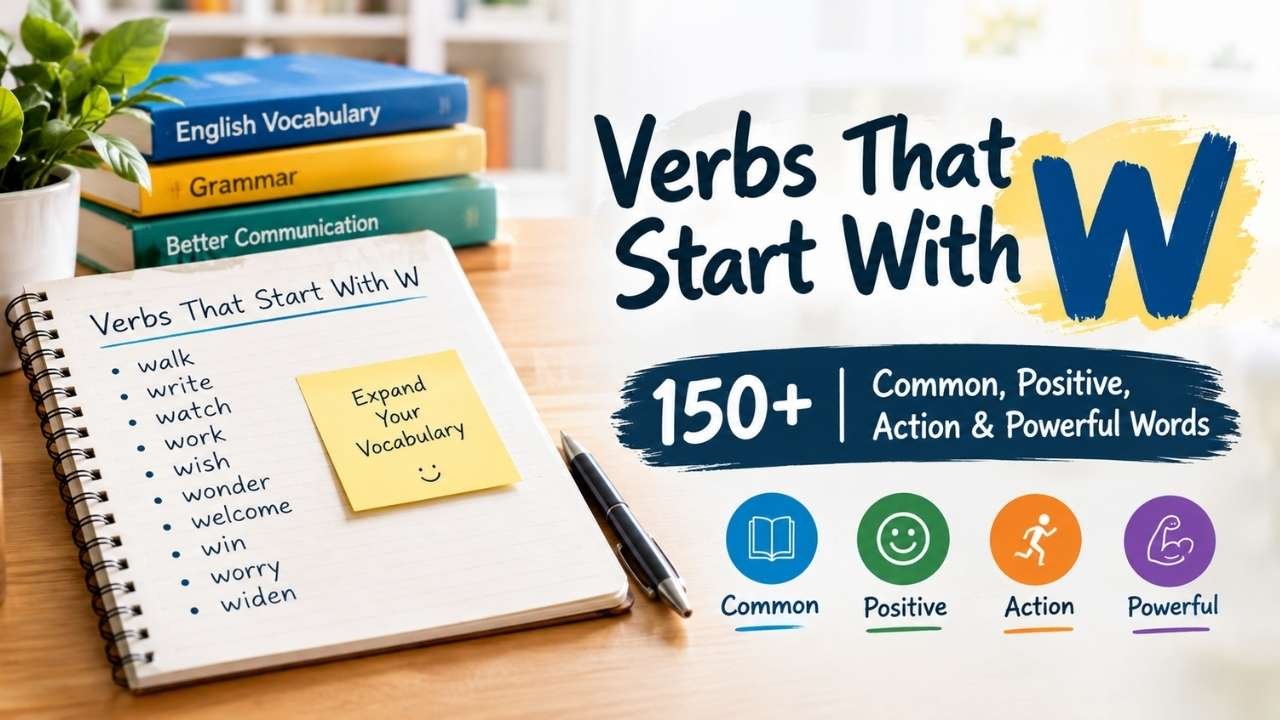
Learning words that start with W is a great way to improve your English vocabulary and make your speaking and writing more effective. Verbs are important action words that describe what people, animals, or things do.
From simple words like walk, write, and work to powerful words like withstand and witness, W verbs can add variety to your sentences. This guide includes a complete list of 150+ verbs starting with W, including common W verbs, action verbs, positive verbs, and powerful verbs with meanings and examples.
Whether you are a student, writer, teacher, or English learner, these verbs beginning with W will help you build stronger vocabulary and communicate more clearly.
Quick Answer
Verbs that start with W are action words beginning with the letter W that describe actions, feelings, thoughts, or activities. Common examples include walk, work, write, watch, wish, and wonder. Learning W verbs with meanings and examples helps students, writers, and English learners improve vocabulary, create better sentences, and communicate more effectively.
What Are Verbs That Start With W?
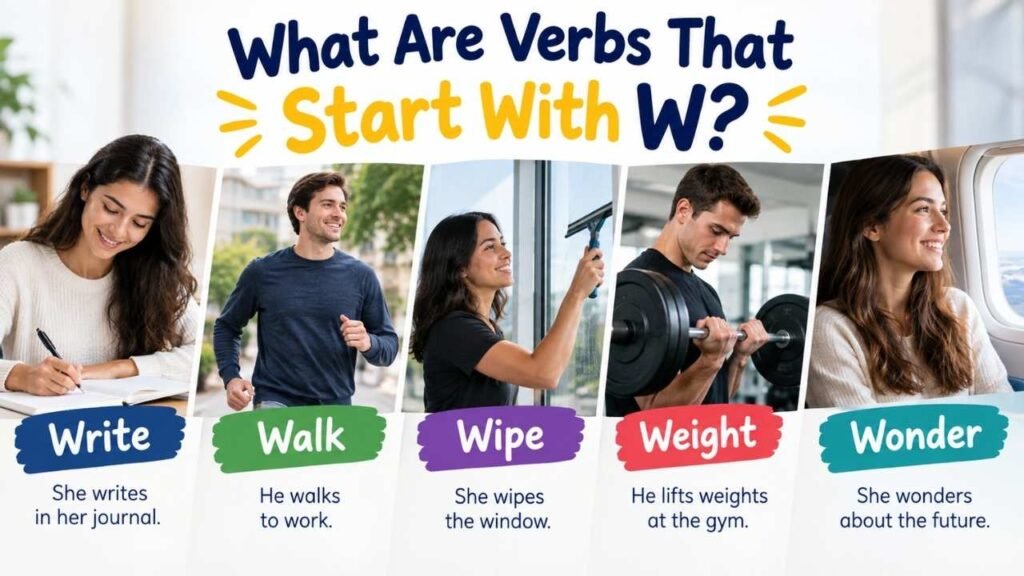
Verbs that start with W are words that show an action, condition, or activity beginning with the letter W. Like all verbs, these words help us explain what someone or something does. For example, walk describes movement, write describes creating words, and wonder describes thinking about something.
Learning verbs beginning with W can help improve your English skills and make your sentences more interesting. These English verbs starting with W are useful for students, writers, teachers, and language learners. Whether you need simple vocabulary for daily conversations or stronger words for writing, understanding W verbs can make communication clearer and more effective.
List of Common Verbs That Start With W
There are many common verbs that start with W that we use in everyday English. These verbs describe regular actions, thoughts, and activities that happen in daily life. Some popular examples include walk, wait, watch, work, write, wash, wake, wish, win, and wonder. These everyday W verbs are easy to understand and useful for beginners who want to build their vocabulary.
For example, we write messages, watch movies, work on projects, and wait for important events. Learning these basic verbs starting with W helps English learners create simple sentences and speak with more confidence. These words are also helpful for children and students who are improving their language skills.
Action Verbs That Start With W
Action verbs that start with W describe activities, movements, and things people do. These verbs make sentences more active and help readers clearly understand an action. Some useful examples include walk, wave, wander, whisper, whistle, wrap, wrestle, and withdraw.
These powerful action verbs can improve writing by adding more detail and energy. For example, instead of saying someone “made a sound,” you can say they whispered or whistled. Writers often use strong W verbs to create clearer descriptions in stories, essays, and creative content. Learning a variety of action verbs starting with W allows students and writers to express ideas in a more interesting and effective way.
Positive Verbs That Start With W
Positive verbs that start with W can express kindness, growth, success, and helpful actions. These words are useful when describing good behavior, achievements, or encouraging moments. Some examples include welcome, win, wish, warm, wonder, and worship. The verb welcome shows acceptance and kindness, while win represents success or achievement.
Using positive verbs beginning with W can make your writing sound more friendly and inspiring. These words are helpful for speeches, stories, personal messages, and everyday communication. For example, you can say, “She welcomed new ideas” or “He worked hard to win the competition.” Learning positive vocabulary can help you choose better words and express your thoughts in a more meaningful way. For more phrase meanings, you can also explore Here You Go Meaning.
Powerful Verbs That Start With W for Better Writing
Using powerful verbs starting with W can make your writing stronger and more engaging. Instead of using simple words repeatedly, you can choose specific verbs that show clearer actions. Some strong examples include withstand, wield, witness, wage, wrestle, and withdraw.
The verb withstand means to handle or survive something difficult, while wield means to use something with skill or control. These strong W verbs are useful in essays, stories, reports, and professional writing. They help readers understand situations more clearly and create a stronger impression. Building a collection of powerful verbs that start with W is a great way to improve vocabulary and make your writing more creative and effective.
Verbs That Start With W for Students and ESL Learners
Learning verbs that start with W for students is a simple way to improve vocabulary and sentence-building skills. Beginner learners can start with easy W verbs such as walk, write, watch, wait, wash, wake, and wave. These words are commonly used in daily conversations and classroom activities.
For ESL learners, understanding verbs with meanings and examples makes it easier to remember new vocabulary. For example, “I write my homework,” or “They watch a movie.” Practicing these easy verbs starting with W helps learners speak and write with confidence. Teachers and parents can also use these words to create fun learning activities for children who are developing their English skills.
Descriptive Verbs That Start With W for Creative Writing
Descriptive verbs starting with W help writers create clearer images and stronger emotions in their stories. Instead of using basic verbs, descriptive words can make writing more creative and interesting. Some useful examples include whisper, wander, weave, waver, wiggle, and wriggle.
The verb whisper creates a quiet feeling, while wander can describe moving without a clear direction. These creative verbs are helpful for storytelling, poems, essays, and other forms of writing. Writers can use these words to describe actions in a more detailed way and make readers imagine the scene better. Building a collection of strong verbs that start with W is a great way to improve writing style and vocabulary.
Rare and Unique Verbs That Start With W
Besides common words, there are also many unique verbs starting with W that can expand your vocabulary. These rare W verbs are not used every day but can make your writing more interesting. Examples include wangle, wreathe, wizen, wamble, and waver. The verb wangle means to get something through clever methods, while wreathe means to surround or decorate something.
Learning rare verbs beginning with W helps advanced learners discover new ways to express ideas. These words are especially useful for writers, language lovers, and students who want to improve their vocabulary. Adding uncommon verbs to your word collection can make your communication more creative and memorable.
Letter Verbs That Start With W
Short verbs can also be useful when building vocabulary. Many five-letter verbs starting with W are common and easy to use in sentences. Some examples include waste, widen, worry, waver, and wield. These short W verbs are helpful for students, word games, and writing practice.
For example, waste means to use something carelessly, while widen means to make something larger. Learning shorter verbs helps beginners remember new words quickly and use them correctly. These verbs are also useful for improving spelling and language skills. Whether you are creating a vocabulary list or practicing English grammar, these verbs beginning with W can help you build a stronger foundation.
Verbs That Start With W With Example Sentences
Learning verbs that start with W with meanings and examples makes vocabulary easier to understand and remember. Examples show how each verb works in a real sentence.
| Verb | Meaning | Example Sentence |
| Walk | To move on foot | She walks to school every morning. |
| Write | To create words or text | He writes a story every week. |
| Watch | To look at something carefully | They watch the match together. |
| Wish | To want something to happen | I wish you success. |
| Wonder | To think or ask yourself something | She wonders about the answer. |
| Welcome | To greet someone warmly | They welcomed the new student. |
Using W verbs with examples helps learners understand meaning, pronunciation, and sentence structure more easily.
FAQs
What are some common verbs that start with W?
Some common verbs that start with W include walk, work, write, watch, wait, wash, and wish. These are frequently used in everyday English.
What are positive verbs beginning with W?
Positive verbs beginning with W include welcome, win, wish, warm, and wonder. They express helpful, kind, or encouraging actions.
What are action verbs that start with W?
Examples of action verbs starting with W include walk, wave, whisper, wrap, wander, and wrestle.
How many verbs start with W?
There are many verbs starting with W, including common, advanced, and rare words used in different situations.
What are powerful verbs that start with W?
Strong examples include withstand, wield, witness, wrestle, and withdraw. These verbs can make writing more effective.
Conclusion
Learning verbs that start with W is an excellent way to expand your English vocabulary and improve your communication skills. From simple words like walk and write to advanced verbs like withstand and wield, these words can help you express actions more clearly.
This list of 150+ verbs starting with W includes common verbs, positive verbs, action words, powerful vocabulary, and unique examples for different learning needs.
Whether you are a student, teacher, writer, or English learner, practicing these W verbs with meanings and examples can make your sentences stronger and more creative. Keep exploring new vocabulary and using these words regularly to develop better speaking and writing skills.