
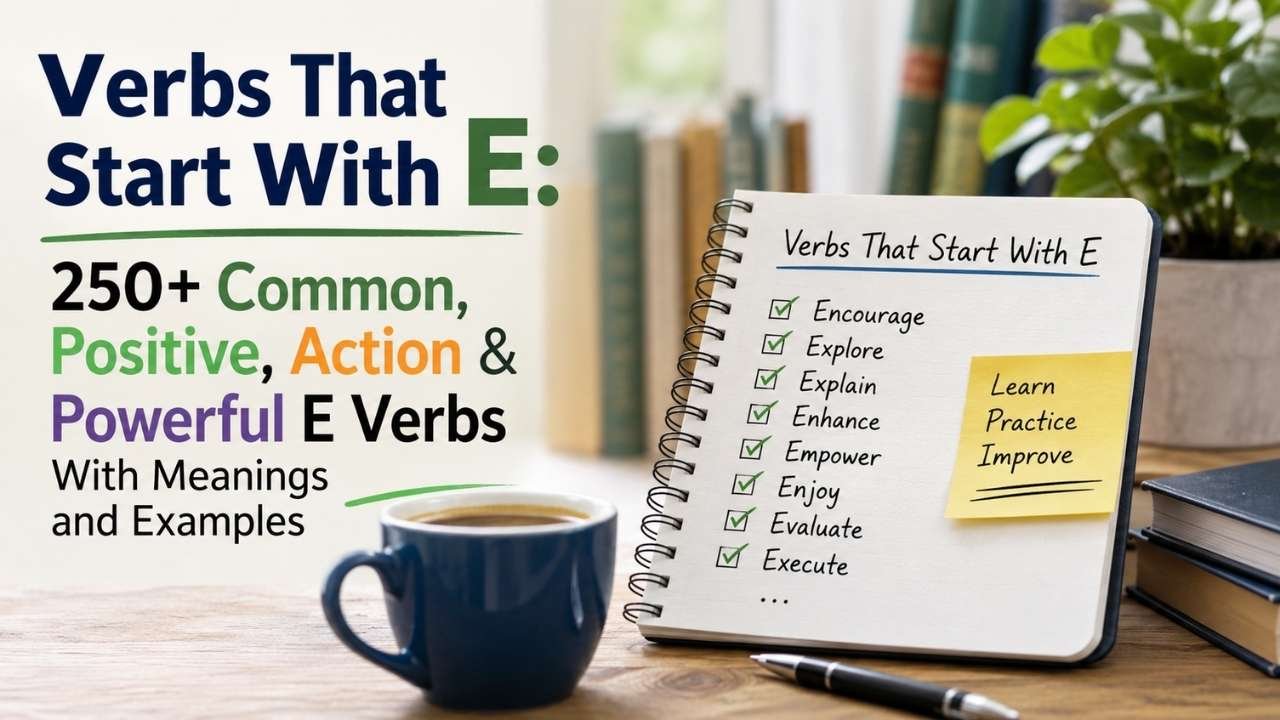
Looking for the best verbs that start with E? You’ve come to the right place. Whether you’re a student, teacher, writer, or English learner, having a strong list of verbs that start with E can improve your vocabulary and make your writing more engaging.
In this guide, you’ll discover common verbs that start with E, positive verbs that start with E, action verbs that start with E, and many other English verbs starting with E. Each verb includes a simple meaning and an easy example, making it perfect for everyday learning.
You’ll also find helpful categories, grammar tips, and practical ways to use these verbs beginning with E in real sentences. Whether you need verbs that start with E with meanings, verbs that start with E with examples, or an alphabetical list of verbs starting with E, this complete resource has everything you need in one place.
Quick Answer
Verbs that start with E are action, state, or helping words that begin with the letter E, such as eat, enjoy, explain, encourage, explore, and examine. They help describe actions, feelings, or conditions in a sentence. Learning these English verbs starting with E can improve your vocabulary, strengthen your writing, and make everyday communication more clear and effective.
What Is a Verb? (Quick Refresher)
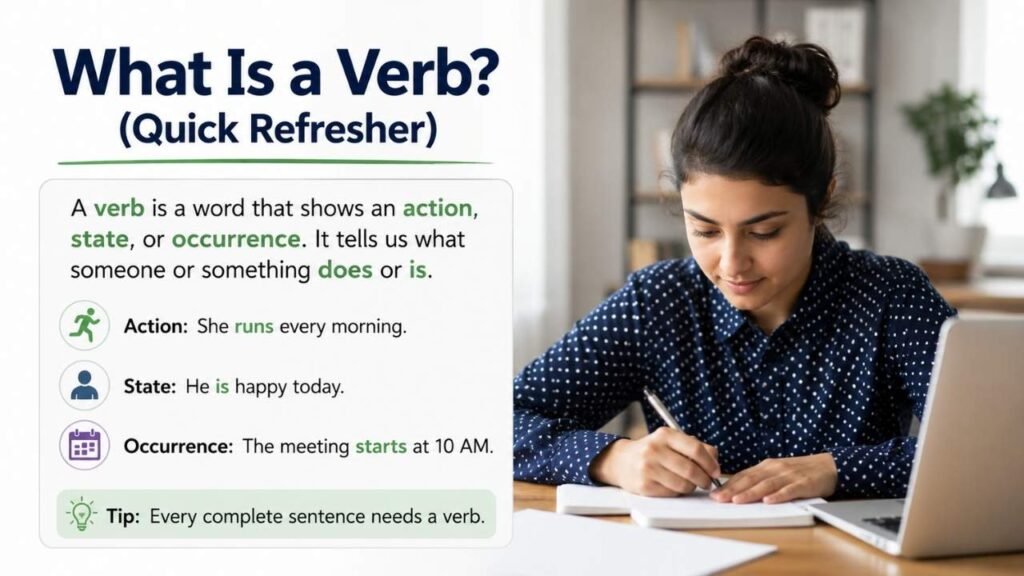
A verb is a word that shows an action, state, or occurrence. It tells us what a person, animal, or thing does or experiences in a sentence. For example, in the sentence “The children eat lunch,” the word eat is the verb because it shows the action.
Verbs are one of the most important parts of English grammar because every complete sentence needs one. Learning verbs that start with E helps you build a stronger vocabulary and write more naturally.
Whether you’re studying grammar, improving your writing, or learning English, understanding verbs is essential. If you also enjoy exploring word meanings and usage, you may like our guide on Too Cute Meaning vs. To Cute, which explains another common English confusion.
Complete List of Verbs That Start With E
This complete list of verbs that start with E brings together many useful words you can use in speaking and writing. The collection includes common verbs, action verbs, positive verbs, and a few advanced words to help expand your vocabulary.
From everyday verbs like eat, enter, and enjoy to stronger words like encourage, educate, and empower, every word serves a different purpose. Reading an alphabetical list of verbs starting with E makes it easier to find the word you need and remember it later.
As you go through the list, pay attention to each verb’s meaning and example sentence. This simple method helps improve your grammar, writing skills, and overall confidence in using English verbs beginning with E.
Common Verbs That Start With E
Common verbs that start with E are words you hear and use almost every day. These verbs are useful in conversations, schoolwork, emails, and daily writing. Examples include eat, earn, enter, enjoy, end, explain, expect, and exercise.
Since these verbs appear often in English, learning them first is a smart way to grow your vocabulary. Try using each word in a simple sentence to remember it more easily. Reading books, watching English videos, and practicing short conversations can also help.
If you’re interested in spelling and grammar, you might also find our article on Targetted or Targeted helpful, as it explains another common writing mistake that many English learners make.
Positive Verbs That Start With E
Positive verbs that start with E express helpful, encouraging, or uplifting actions. They are perfect for writing about success, teamwork, personal growth, and motivation. Words like encourage, empower, enrich, embrace, elevate, and energize create a positive tone and make your writing more inspiring.
These verbs are often used in speeches, resumes, cover letters, business communication, and self-improvement content. For example, instead of saying someone “helped,” you can say they empowered or encouraged others.
Choosing stronger verbs makes your message more meaningful and memorable. Learning these positive E verbs not only improves your vocabulary but also helps you communicate with confidence in both personal and professional situations.
Action Verbs That Start With E
Action verbs that start with E describe something that can be done physically or mentally. They make sentences more active, clear, and interesting. Some popular examples include eat, edit, erase, escape, explore, exercise, examine, and execute.
These words are useful in storytelling, essays, reports, and everyday conversations because they clearly show what someone is doing. For instance, instead of writing “She looked around,” you could write “She explored the old house,” which creates a stronger image.
Using action verbs starting with E helps readers picture the action more easily. They also improve sentence variety and make your writing sound more natural, engaging, and expressive.
Business & Professional Verbs That Start With E
Business and professional verbs that start with E are useful in the workplace, resumes, emails, meetings, and reports. They help you describe skills, achievements, and responsibilities in a clear and confident way.
Some excellent examples include evaluate, execute, establish, expand, enhance, encourage, estimate, and educate. For example, instead of saying, “I helped the team,” you can write, “I executed projects and enhanced team performance.” These stronger verbs make your writing sound more professional and show your experience more clearly.
Whether you are preparing a resume, writing a business proposal, or sending a professional email, learning these business verbs that start with E can improve your communication and leave a positive impression.
Academic Verbs That Start With E
Academic verbs that start with E are commonly used in schools, colleges, research papers, and formal writing. They help explain ideas, present evidence, and discuss information in a clear way.
Some useful examples include evaluate, examine, explain, explore, estimate, establish, elaborate, and edit. These verbs often appear in essays, assignments, and reports because they describe thinking, analyzing, and learning. For example, you might write, “The researcher examined the results before drawing a conclusion.”
Using these English verbs starting with E makes your academic writing more accurate and professional. If you are a student or an English learner, practicing these verbs will improve both your writing skills and your confidence in using formal English.
Verbs That Start With E for Kids & Beginners
Learning verbs that start with E for kids and beginners is a fun way to build vocabulary. Start with simple words that children hear and use every day. Easy examples include eat, enter, enjoy, end, erase, exercise, excuse, and explore.
These verbs are easy to understand and can be practiced through games, reading, or simple conversations. For example, “We eat breakfast every morning,” or “The children enjoy playing outside.” Short, clear sentences help young learners remember new words more easily.
Parents and teachers can also encourage children to use these common verbs that start with E in daily conversations. Regular practice makes learning English more enjoyable and helps beginners become more confident speakers and writers.
Rare & Advanced Verbs That Start With E
Once you know the basic words, you can learn rare and advanced verbs that start with E to make your vocabulary richer. These words appear more often in books, formal writing, and advanced conversations.
Examples include emanate, emulate, enunciate, expedite, extol, eradicate, evoke, and envision. While you may not use these verbs every day, understanding them helps improve reading and writing skills.
For instance, “Expedite” means to make a process faster, while “evoke” means to bring a feeling or memory to mind. Adding these advanced English verbs beginning with E to your vocabulary gives you more choices when expressing ideas and makes your writing more interesting and precise.
How to Use E Verbs in Sentences
Knowing a verb is only the first step. The next step is learning how to use verbs that start with E in sentences correctly. Always choose a verb that matches the meaning and tense of your sentence.
For example, “They explore new places every summer,” uses the present tense, while “She explained the lesson yesterday,” uses the past tense. Reading books and writing short paragraphs are great ways to practice. You can also create your own examples using common verbs, action verbs, and positive verbs that start with E.
The more you use these verbs in real situations, the more natural they will become. Regular practice is the best way to improve your grammar and writing skills.
Tips to Remember Verbs That Start With E
The easiest way to remember verbs beginning with E is to practice them a little every day. Instead of trying to memorize a long list at once, learn five or ten new verbs each day and use them in your own sentences.
Grouping words into categories like action verbs, positive verbs, business verbs, and academic verbs also makes them easier to remember. Reading English books, watching videos, and playing vocabulary games are fun ways to reinforce your learning.
Keeping a small notebook of English verbs starting with E can also help you review them regularly. The more often you read, write, and speak these words, the faster they become part of your everyday vocabulary.
FAQs
What are some common verbs that start with E?
Some common verbs that start with E include eat, enjoy, enter, earn, explain, expect, exercise, explore, and end. These words are frequently used in everyday English.
What are positive verbs that start with E?
Popular positive verbs that start with E are encourage, empower, enrich, embrace, elevate, and energize. They are often used in motivational, personal, and professional writing.
What are action verbs that start with E?
Examples of action verbs that start with E include edit, erase, escape, examine, execute, explore, and exercise. These verbs describe physical or mental actions.
Why should I learn verbs beginning with E?
Learning verbs beginning with E helps improve your vocabulary, strengthens your grammar, and makes your speaking and writing more natural. It also gives you more word choices for school, work, and everyday communication.
Conclusion
Learning verbs that start with E is an easy way to expand your English vocabulary and improve your writing and speaking skills. From common verbs you use every day to positive, action, business, and academic verbs, each word helps you express ideas more clearly.
The key is to practice regularly by reading, writing, and using new verbs in daily conversations. Over time, these English verbs starting with E will become a natural part of your vocabulary.
Keep this list of verbs that start with E as a reference whenever you need new words, and continue exploring more verbs to become a more confident English speaker and writer.