

Have you ever wondered whether “themself” or “themselves” is the correct word to use? You’re not alone. Many English learners, writers, and even native speakers get confused when choosing between these two reflexive pronouns.
The confusion often comes from the growing use of singular they, changing grammar preferences, and modern inclusive language practices. So, is themself grammatically correct, or should you always use themselves? The answer depends on the context.
In this guide, you’ll learn the difference between themself and themselves, when each form is appropriate, and how pronoun agreement works in modern English grammar. We’ll also explore grammar rules, examples, dictionary perspectives, and common mistakes, helping you confidently decide whether to use themself or themselves in your writing.
Quick Answer
“Themselves” is the standard reflexive pronoun for they and is the preferred choice in most formal and everyday English grammar. “Themself” is also a real word and is accepted by many dictionaries, mainly when referring to singular they, especially in gender-neutral or nonbinary contexts. Choosing themself or themselves depends on the sentence, style, and intended meaning.
What Is the Difference Between “Themself” and “Themselves”?
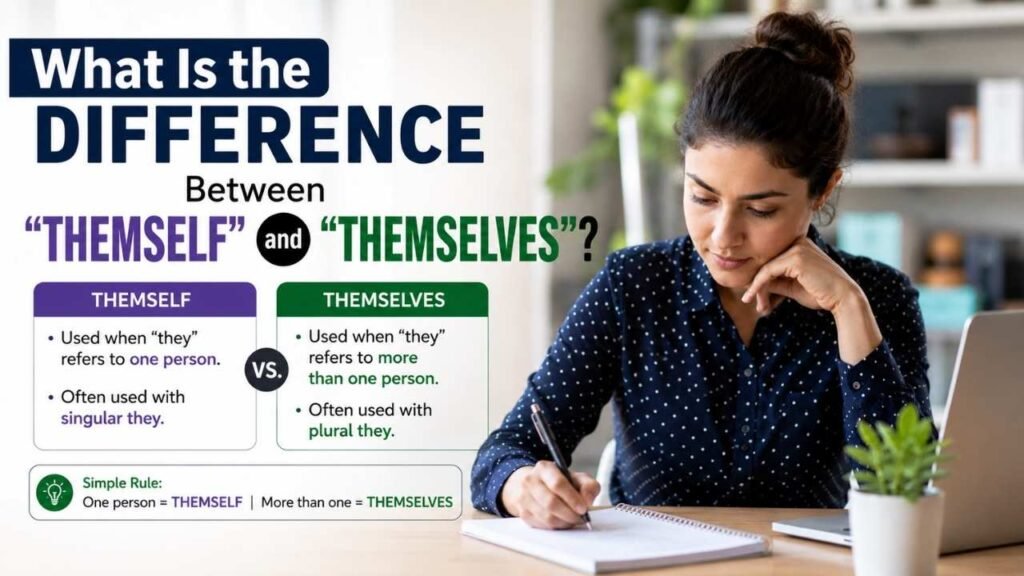
The difference between themself and themselves is mainly about grammar, usage, and the meaning of singular they. Themselves is the traditional reflexive pronoun used when they refers to more than one person.
For example, “The players congratulated themselves after the match.” Themself, on the other hand, is used when they refers to one person, especially in gender-neutral or nonbinary contexts. This use has become more common in modern English and is recognized by several dictionaries.
While themselves remains the preferred choice in many formal situations, themself is also accepted in specific contexts. Understanding the difference between themself and themselves will help you write more clearly and confidently. If you’re looking to expand your vocabulary, check out our guide on Words That Start With BI.
Is “Themself” a Real Word?
Yes, themself is a real word, and it is listed in respected dictionaries such as Cambridge Dictionary and Merriam-Webster. Many people ask, “Is themself grammatically correct?” because they are more familiar with themselves.
The answer is yes. Themself is commonly used as the reflexive pronoun for singular they, especially when referring to a person whose gender is unknown or someone who uses they/them pronouns.
For example, “Every customer should ask themself if they have all the information they need.” Although themselves is still more common in traditional writing, themself is becoming more accepted in inclusive language and modern English grammar.
Why Do People Get Confused Between “Themself” and “Themselves”?
The confusion between themself and themselves comes from the changing use of singular they in English grammar. For many years, people learned that they was only plural, so themselves seemed like the only correct reflexive pronoun.
Today, they is also widely used for one person, especially when gender is unknown or when someone prefers gender-neutral pronouns. Because of this change, some writers choose themself, while others still prefer themselves.
Both forms may appear in books, articles, and conversations, making it difficult to know which one to use. Learning the grammar rules behind each form removes the confusion. You can also strengthen your language skills by exploring our collection of Verbs That Start With E.
When Should You Use “Themself”?
Use themself when they refers to one person instead of several people. This is most common with singular they, especially in inclusive language or when a person’s gender is unknown.
For example, “Each student should remind themself to submit the assignment before the deadline.” In this sentence, themself refers to one student, not a group. Many dictionaries now recognize this form, although some editors and style guides still prefer themselves in formal writing.
If you are writing for a school, business, or publication, check the preferred style. Knowing when to use themself helps you follow modern grammar rules, improve pronoun agreement, and write in a way that is both respectful and easy to understand.
When Should You Use “Themselves”?
Use themselves when they refers to more than one person. It is the traditional reflexive pronoun in English grammar and is the preferred form in most formal, academic, and professional writing.
For example, “The employees prepared themselves for the meeting,” clearly refers to a group. Some writers also use themselves with singular they, especially because it has been accepted for many years and sounds more familiar to many readers.
If you’re unsure whether to use themself or themselves, themselves is usually the safer choice for formal documents. Understanding when to use themselves helps you maintain proper pronoun agreement while writing clear and natural sentences.
Grammar Rules for “Themself” and “Themselves”
The main grammar rule is simple: match the reflexive pronoun with the meaning of they. If they refers to a group, use themselves. If they refers to one person, themself may be appropriate, especially in modern English and inclusive language.
For example, “The players congratulated themselves” is correct because it refers to several people. “Each participant should prepare themself” refers to one person using singular they.
However, many formal writers still choose themselves even with singular they. Learning these grammar rules makes it easier to decide when to use themself or themselves in different writing situations.
Style Guide and Dictionary Recommendations
Most major dictionaries agree that themself is a real word, but style guides may have different preferences. Dictionaries like Cambridge Dictionary and Merriam-Webster recognize themself as the reflexive pronoun for singular they.
However, some academic and professional style guides continue to recommend themselves because it has been used for a longer time. In modern inclusive writing, themself is becoming more common, especially when referring to a specific person who uses they/them pronouns.
If you’re writing for school, work, or publication, always follow the required style guide. Otherwise, choose the form that best fits your audience and keeps your writing clear.
Themself vs. Themselves Comparison Table
| Feature | Themself | Themselves |
| Meaning | Reflexive pronoun for singular they | Reflexive pronoun for plural they |
| Usage | One person | More than one person |
| Grammar | Accepted in modern English | Traditional standard form |
| Common Context | Gender-neutral or nonbinary references | Groups, teams, or plural subjects |
| Formality | Less common in formal writing | Preferred in formal and academic writing |
| Example | “Each employee should ask themself.” | “The employees prepared themselves.” |
This comparison makes it easier to understand the difference between themself and themselves. While both forms can be correct, the right choice depends on whether they refers to one person or several people and on the style of writing you are using.
Common Mistakes and How to Avoid Them
One common mistake is using themself when talking about a group. For example, “The students taught themself” is incorrect because students is plural. The correct sentence is, “The students taught themselves.”
Another mistake is thinking that themself is not a real word. In fact, it is recognized in modern dictionaries and is accepted with singular they in many situations. Some writers also avoid checking their audience or style guide before choosing between themself and themselves.
To avoid errors, first decide whether they refers to one person or many people. Then choose the correct reflexive pronoun that matches the sentence and context.
Memory Tricks to Remember the Difference
A simple trick can help you remember themself or themselves. Think about the number of people involved. If they refers to one person, themself may be the correct choice. If they refers to more than one person, use themselves.
Another easy tip is to ask yourself, “Am I talking about one individual or a group?” The answer will usually point you to the correct reflexive pronoun. If you’re writing a formal paper or business document and you’re unsure, themselves is often the safer option unless a specific style guide recommends themself.
This simple habit will improve your English grammar and help you write with confidence.
FAQs
Is themself grammatically correct?
Yes. Themself is grammatically correct when used as the reflexive pronoun for singular they, especially in modern and inclusive language.
Is themself a real word?
Yes. It appears in respected dictionaries, including Cambridge Dictionary and Merriam-Webster.
Which is correct: themself or themselves?
Both are correct. Themself usually refers to one person using singular they, while themselves is the standard form for plural they and is more common in formal writing.
Can I use themselves with singular they?
Yes. Many writers and style guides still prefer themselves with singular they, especially in academic and professional writing.
Why is themself becoming more common?
It has grown in popularity because of the wider use of singular they and gender-neutral pronouns in modern English.
Should I use themself in formal writing?
It depends on the style guide. If no specific guidance is provided, themselves is generally the safer choice for formal documents.
Conclusion
Choosing between themself and themselves depends on the meaning of your sentence and your audience. Themselves remains the traditional and widely accepted reflexive pronoun, making it the best choice for most formal, academic, and professional writing.
Themself, however, is a real word that is increasingly used with singular they, especially in inclusive language and when referring to one person. Both forms have a place in modern English grammar, so neither is automatically wrong.
The key is to understand the context, follow pronoun agreement, and use the style that best suits your readers. Once you know these grammar rules, deciding between themself or themselves becomes much easier.