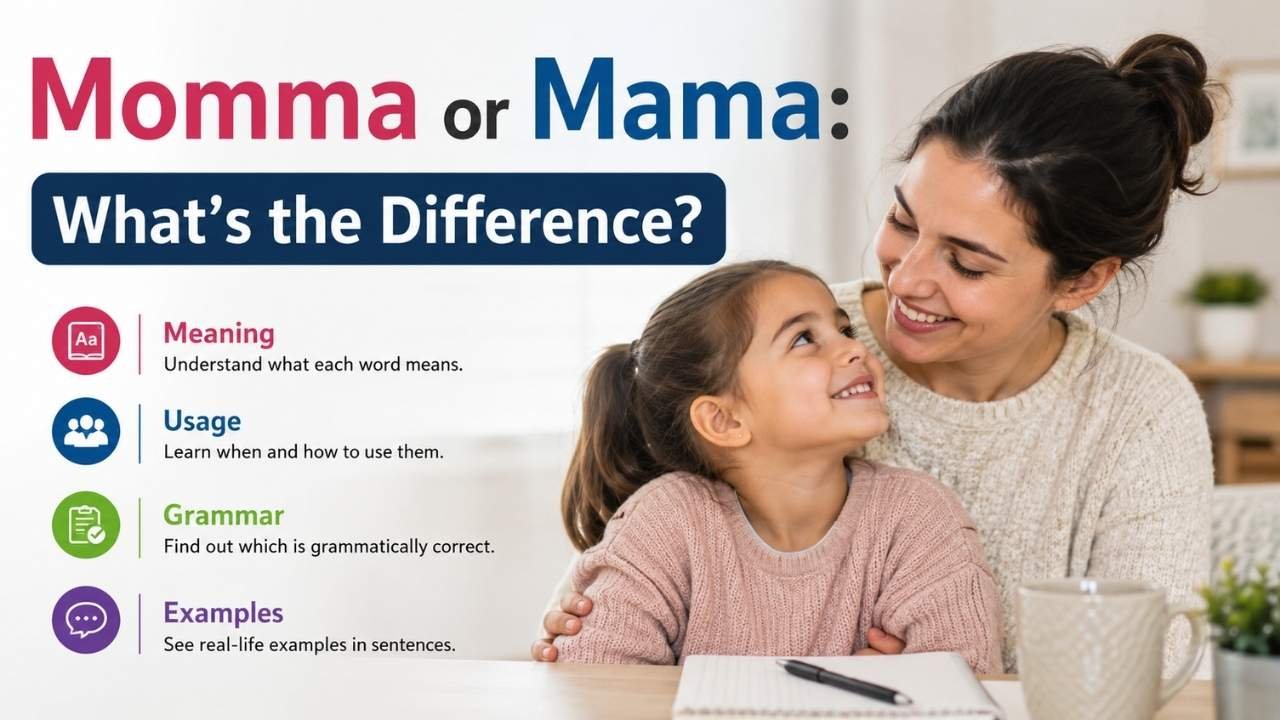
Choosing between “momma” and “mama” may seem simple, but these two words can carry different meanings depending on where you live, how you use them, and the tone you want to express.
While both are affectionate ways to refer to a mother, many people wonder which spelling is correct, whether momma is grammatically acceptable, and if one is more common than the other. The answer is that both words are correct, but they are used in different contexts.
Mama is widely recognized across English-speaking regions, while momma is especially popular in Southern American English and informal conversations. In this guide, you’ll learn the difference between momma and mama, their meanings, grammar, regional usage, examples, and tips to help you choose the right word with confidence.
Quick Answer
Both momma and mama are correct ways to refer to a mother, but they are used in different contexts. Mama is the more common and widely accepted spelling across English-speaking regions, while momma is a warmer, more informal variation often associated with Southern American English. The best choice depends on your audience, writing style, and personal or regional preference.
What Does “Mama” Mean?
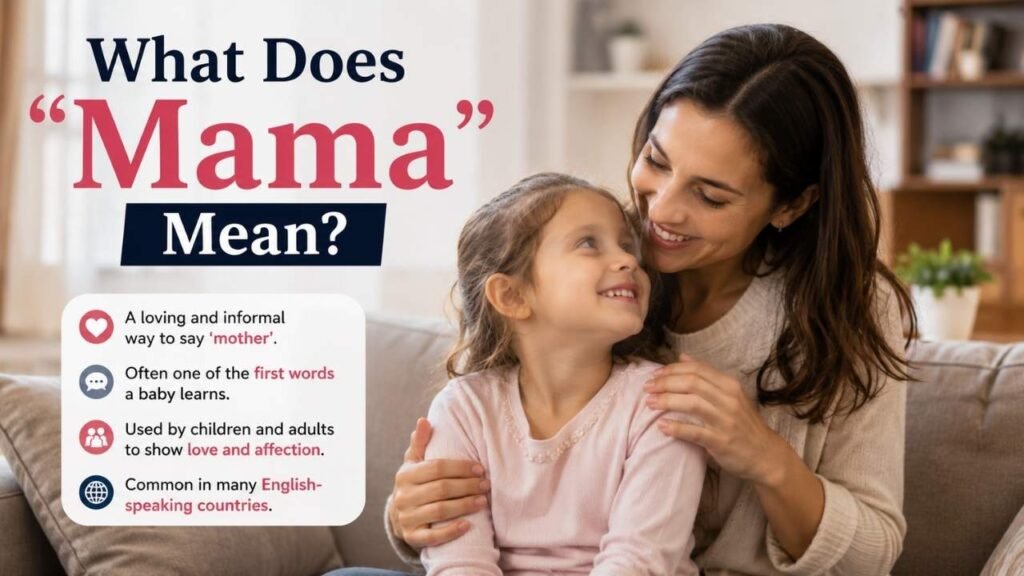
The word mama is a loving and informal way to refer to a mother. It is one of the first words many babies learn because the sound is easy to pronounce. Today, mama is used by children and adults to express love, warmth, and respect. It is common in American English and many other English-speaking countries. You will often hear mama in everyday conversations, songs, books, and movies.
Although mama is an informal term, it is widely accepted and considered a standard spelling. It works well in personal conversations, family settings, and even many forms of writing.
If you enjoy expanding your English vocabulary, you can also explore our guide on Verbs That Start With R, where you’ll find useful verbs with meanings and examples.
What Does “Momma” Mean?
Like mama, momma is an affectionate word for mother. The main difference is that momma has a stronger connection to Southern American English and informal speech. Many families use this spelling because it feels more personal, comforting, and emotional.
You’ll often see momma in novels, country songs, movies, and casual conversations. It is also common in dialogue where writers want characters to sound natural or reflect a particular regional accent.
While momma is less common in formal writing, it is still a correct and recognized spelling. Choosing between momma and mama usually depends on personal preference, family tradition, and the tone you want to create.
Momma vs. Mama: Side-by-Side Comparison
Although momma and mama both mean mother, they have slight differences in tone and usage. The table below makes the comparison simple.
| Feature | Mama | Momma |
| Meaning | Mother | Mother |
| Tone | Warm and affectionate | Warm, affectionate, and regional |
| Formality | Suitable for most informal writing | Best for casual and creative writing |
| Common Usage | Used around the world | Popular in the Southern United States |
| Writing Style | General English | Regional and conversational |
| Grammar | Standard spelling | Accepted informal spelling |
Both words are correct. The best choice depends on your audience, writing style, and regional preference.
Is “Momma” or “Mama” Grammatically Correct?
Many people ask whether momma or mama is the correct spelling. The simple answer is that both are grammatically correct when used in the right context. Mama is the more widely accepted spelling and appears more often in dictionaries, books, and general writing. It is also the safer choice for school assignments and professional content.
On the other hand, momma is recognized as an informal spelling. It is commonly used in Southern American English, family conversations, and creative writing. It is not considered a mistake—it simply reflects a different style of English. If you’re writing dialogue or a personal story, momma can sound more natural and heartfelt.
When Should You Use “Mama”?
Choose mama when you want a word that is warm, friendly, and widely understood. It is suitable for greeting cards, blog posts, children’s books, family conversations, and social media. Many adults continue to call their mother mama because it expresses affection and respect.
Since mama is recognized across many English-speaking regions, it is an excellent choice when writing for a broad audience. If you want your content to sound natural without focusing on a specific regional dialect, mama is usually the better option.
Just as choosing the right word matters, understanding expressions like Ain’t No Fun When the Rabbit Got the Gun also shows how context can change the meaning of everyday English.
When Should You Use “Momma”?
Use momma when you want your writing to feel personal, emotional, or connected to a particular region. This spelling is especially common in the Southern United States, where many families have used it for generations. It often appears in country music, novels, movies, and everyday conversations.
Writers also use momma in dialogue because it makes characters sound authentic and relatable. Although it is not usually recommended for formal or academic writing, it is perfectly acceptable in casual communication.
Before choosing between momma and mama, think about your audience, the tone of your writing, and the message you want to share.
Why Do Some People Say “Momma” Instead of “Mama”?
Many people say momma instead of mama because of family traditions, regional speech, or simply personal preference. In many parts of the Southern United States, momma has been passed down through generations and sounds more natural in everyday conversations.
Some people also feel that momma sounds warmer and more emotional than mama. Books, movies, country songs, and TV shows have also helped make momma a familiar word. There is no grammar rule that says one is better than the other.
The choice usually depends on where you grew up, how your family speaks, and the tone you want to create. Both words show love, respect, and affection for a mother.
Is “Momma” More Common in the Southern United States?
Yes, momma is especially common in the Southern United States. Many people in states like Texas, Alabama, Georgia, Mississippi, Tennessee, and Kentucky use this spelling in everyday speech. It reflects the region’s unique way of speaking and has become part of Southern culture.
However, that does not mean people outside the South never use it. Across other English-speaking regions, mama is generally the more common spelling because it is recognized by a wider audience.
If you are writing for readers around the world, mama may be the safer choice. If your goal is to reflect Southern American English or create authentic dialogue, momma is often the better fit.
Momma vs. Mama vs. Mom vs. Mother
All four words refer to a mother, but each has a different tone and level of formality. Understanding these differences can help you choose the most suitable word for your writing.
| Word | Tone | Best Used For |
| Mother | Formal | Official, academic, and professional writing |
| Mom | Neutral | Everyday conversations |
| Mama | Warm and affectionate | Family conversations, children’s speech, general writing |
| Momma | Personal and regional | Informal speech, Southern dialect, creative writing |
There is no single “correct” choice. Your decision should depend on your audience, purpose, and the style of English you want to use.
Common Mistakes People Make
One of the biggest mistakes is believing that momma is an incorrect spelling. In reality, both momma and mama are correct, but they are used in different situations. Another common mistake is using momma in formal essays or professional documents, where mama or mother may be more appropriate.
Some people also assume that mama is only used by young children, but many adults continue to use it throughout their lives.
Finally, avoid switching between momma and mama in the same piece of writing unless there is a clear reason. Keeping your wording consistent makes your content easier to read and understand.
Real-Life Examples of Momma and Mama in Sentences
Seeing these words in context makes it easier to understand when each one fits best.
Examples with “Mama”
- Mama, thank you for always believing in me.
- My little sister called our mama after school.
- Everyone wished Mama a happy birthday.
Examples with “Momma”
- My momma makes the best homemade pie.
- His momma always encouraged him to follow his dreams.
- “Don’t worry,” Momma said with a smile.
These examples show that mama and momma share the same meaning, but the tone and style may feel slightly different depending on the situation.
FAQs
Is “momma” a real word?
Yes. Momma is a real and widely recognized word used in informal English, especially in the Southern United States.
Which is more common: momma or mama?
Mama is generally more common across English-speaking countries, while momma is more popular in certain regions.
Can adults say “mama”?
Absolutely. Many adults continue to call their mother mama as a sign of love and respect.
Is “momma” grammatically correct?
Yes. It is grammatically correct in informal writing, conversations, and creative works.
Can I use both words interchangeably?
Yes, but choose the one that best matches your audience, tone, and writing style.
Conclusion
Both momma and mama are correct, affectionate ways to refer to a mother. The main difference lies in tone, regional usage, and writing context rather than grammar. If you want a spelling that is widely understood and suitable for most readers, mama is usually the better choice.
If you want your writing to sound more personal, emotional, or reflect Southern American English, momma is an excellent option. In the end, neither word is better than the other.
Choose the one that matches your audience, fits your message, and feels most natural. What matters most is the love and respect the word expresses, not the spelling itself.