
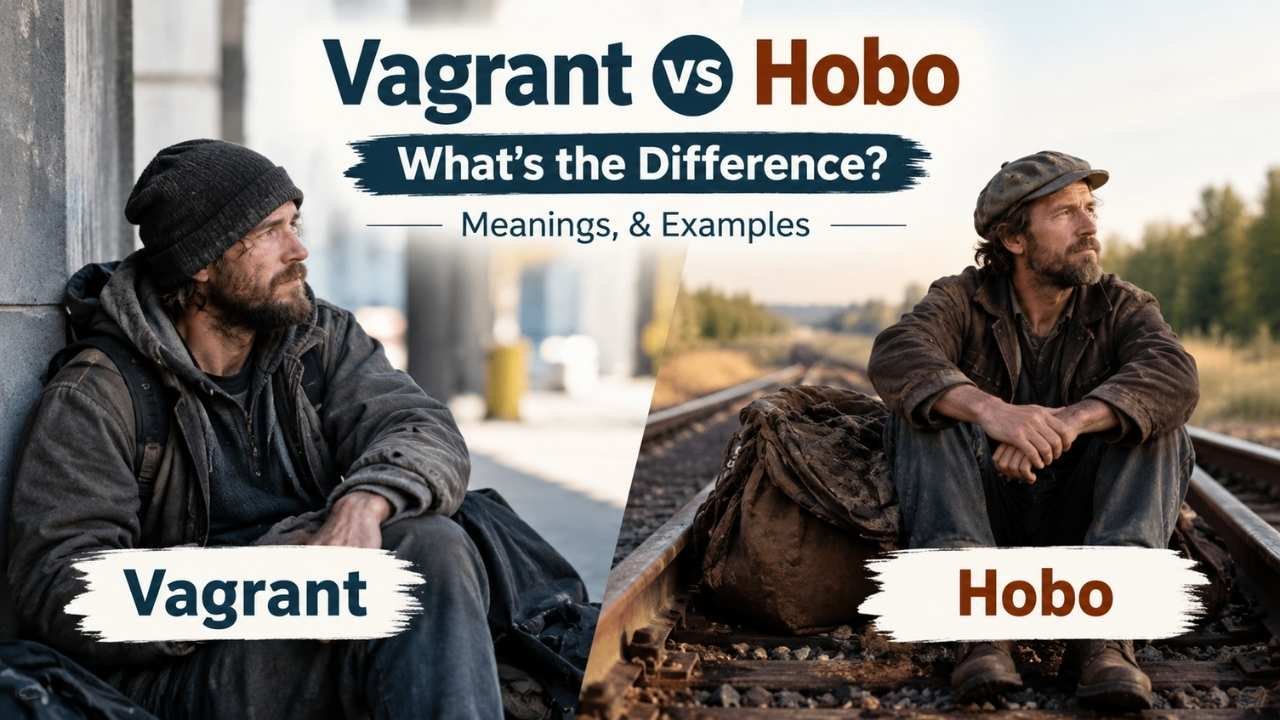
Many people use the words hobo vs vagrant as if they mean the same thing, but they actually have different meanings. Understanding the difference between a hobo and a vagrant can help you use these terms correctly in conversations, writing, or history discussions.
While both words are often linked to homelessness and a life without a permanent home, their backgrounds and purposes are not the same. A hobo traditionally traveled to find work, while a vagrant was generally someone without a fixed residence who wandered without steady employment.
In this guide, we’ll explore Vagrant vs Hobo in simple language, covering their definitions, historical origins, key differences, modern usage, and related terms like tramp, vagabond, and drifter. By the end, you’ll know which word fits the right context and why these distinctions still matter today.
Quick Answer
The main difference between a hobo and a vagrant is their purpose and lifestyle. A hobo is traditionally an itinerant worker who travels from place to place looking for temporary jobs, while a vagrant is someone without a fixed residence who wanders without regular employment. Although both terms have historical links to homelessness, hobo often reflects work and travel, whereas vagrant is more closely associated with vagrancy laws and social or legal status.
What Is a Hobo?

A hobo is a person who travels from place to place looking for temporary work instead of staying in one location. Unlike someone who simply wanders, a hobo is usually an itinerant worker willing to take jobs wherever they are available.
The term became popular in the United States during the late 1800s and the Great Depression, when many people traveled by freight trains to find employment. Although some hobos did not have a fixed residence, they were often focused on earning a living rather than avoiding work.
Today, the hobo meaning is mostly historical, but the word still appears in books, movies, and conversations. If you’re interested in grammar topics, you may also enjoy our guide on Verbs That Start With C.
What Is a Vagrant?
A vagrant is generally a person who has no permanent home and moves from place to place without regular employment. The vagrant definition has often been connected with old vagrancy laws, which allowed authorities to question or arrest people who appeared to be wandering without work or a fixed address.
Unlike a hobo, a vagrant is not traditionally known for traveling to find jobs. Instead, the word usually describes someone’s social or legal situation. In modern English, many people avoid using this term because it can sound negative or outdated.
When writing about historical topics, using the correct spelling is just as important as choosing the right word, so you might also like our article on Openned or Opened.
Vagrant vs Hobo: Key Differences Explained
The biggest difference between a hobo and a vagrant is the reason they travel. A hobo usually travels to find work, while a vagrant is someone without steady employment or a fixed residence.
Both terms have been linked to homelessness, but they do not describe the same lifestyle. Historically, hobos were known as traveling workers, while vagrants were more often connected to vagrancy laws and public perception. Another difference is how these words are used today.
Hobo is often used in historical or cultural discussions, whereas vagrant can sound legal or outdated. Understanding these differences helps you choose the right word and avoid common mistakes in writing and conversation.
How Are Hobos, Vagrants, Tramps, and Vagabonds Different?
Although these words are often grouped together, they have different meanings. A hobo travels to look for work, making them an itinerant worker. A tramp usually travels but prefers not to work if possible.
A vagrant is someone who has no fixed residence and may be unemployed, often described in historical legal records. A vagabond is a broader term for a wandering person and is sometimes used in literature instead of the other words.
You may also hear the word drifter, which describes someone who moves from place to place without clear plans. Knowing the differences between hobo vs tramp, hobo vs vagabond, and vagrant vs hobo makes these historical terms much easier to understand.
The History Behind the Terms
The words hobo and vagrant have been used for more than a century, but they developed in different ways. The word vagrant comes from an older legal term used to describe people who had no fixed residence or regular work.
The word hobo became popular in the United States during the late 1800s. Many hobos traveled by freight trains while looking for temporary employment, especially during the Great Depression. They became part of a unique hobo culture, creating signs and symbols to help other travelers.
Over time, both words became linked with poverty and homelessness, even though their original meanings were different. Understanding this history helps explain why people often confuse these terms today.
Are These Terms Still Used Today?
Yes, both hobo and vagrant are still used today, but they are much less common than they once were. You may see these words in history books, old newspaper articles, movies, or discussions about American culture.
In everyday English, people usually choose more respectful and accurate terms, especially when talking about homelessness or housing insecurity. The word hobo is often used when discussing history or railroad culture, while vagrant sometimes appears in legal or historical writing.
Because language changes over time, it is helpful to understand both their historical usage and modern usage. Knowing the context allows you to choose the most appropriate word for your audience.
Are “Hobo” and “Vagrant” Offensive or Outdated?
Today, some people consider both hobo and vagrant to be outdated or even offensive, depending on how they are used. Historically, these words described specific groups of people, but modern conversations about homelessness focus on using respectful language.
For example, many organizations prefer phrases like “person experiencing homelessness” instead of labels that may carry negative meanings. However, the words hobo and vagrant are still appropriate when discussing history, literature, or vagrancy laws, as long as they are used accurately.
The key is understanding the context. Choosing thoughtful language helps avoid stereotypes while still explaining the historical difference between these well-known terms.
Common Misconceptions About Hobos and Vagrants
Many people believe that every hobo is homeless or that every vagrant refuses to work, but these ideas are not always true. A hobo traditionally traveled to find jobs and often worked wherever opportunities were available.
A vagrant, on the other hand, was identified more by having no permanent home or steady employment. Another common misunderstanding is that hobo, tramp, vagabond, and drifter all mean exactly the same thing.
While they are related, each word has its own history and meaning. Learning these differences helps you avoid common mistakes and gives you a better understanding of these historical terms and their place in the English language.
Real-Life Examples of “Hobo” and “Vagrant” in Sentences
Seeing these words in context makes their meanings much easier to remember. Here are a few examples:
- During the Great Depression, many hobos traveled across the country looking for seasonal work.
- The old newspaper described the man as a vagrant because he had no fixed address.
- The museum featured an exhibit about hobo culture and the symbols used by traveling workers.
- The novel included a vagabond who wandered from town to town in search of adventure.
- The article explained the difference between a hobo and a vagrant with simple historical examples.
These sentences show that each word has a different meaning and should be used in the right context.
Which Term Should You Use Today?
In most modern situations, it is best to avoid using hobo or vagrant unless you are talking about history, literature, or explaining their meanings. If you are referring to someone who does not have stable housing, respectful phrases like “person experiencing homelessness” are usually more appropriate.
If you are writing about the past, using hobo for an itinerant worker and vagrant for someone described under historical vagrancy laws is the most accurate choice. Understanding the difference between a vagrant and a hobo helps you communicate clearly and respectfully.
Using the correct word also makes your writing more precise, informative, and easy for readers to understand.
FAQs
Is every hobo homeless?
No. Historically, many hobos traveled for work and did not always consider themselves homeless. Their main goal was finding temporary employment.
Can someone be both a hobo and a vagrant?
In some historical situations, yes. A person without a fixed residence who traveled for work could have been described using both terms, depending on the context.
What is the difference between a hobo and a drifter?
A hobo traditionally searched for work, while a drifter simply moved from place to place without a clear purpose or long-term plans.
What are vagrancy laws?
Vagrancy laws were historical laws that targeted people who were unemployed or had no permanent home. Many of these laws have since been changed or repealed.
Why did hobos ride freight trains?
Many hobos used freight trains because they were an inexpensive way to travel between towns while looking for seasonal or temporary jobs.
Conclusion
The Vagrant vs Hobo comparison is about more than just two similar words. While both terms describe people who lived without a permanent home, their history, purpose, and usage are different.
A hobo was traditionally an itinerant worker searching for employment, whereas a vagrant was generally known for having no fixed residence and was often connected to historical vagrancy laws. Today, these words are mostly used in historical discussions rather than everyday conversation.
Understanding their meanings, related terms like tramp, vagabond, and drifter, and the importance of respectful language will help you use each word correctly and confidently in both writing and conversation.