
If you’re looking for verbs that start with C, you’ve come to the right place. Whether you’re a student, writer, teacher, or English learner, having a strong list of verbs that start with C can improve your English vocabulary, writing, and everyday communication.
Verbs are action words or doing words that describe what someone or something does, feels, or becomes. In this guide, you’ll find common verbs that start with C, along with their meanings, example sentences, and helpful categories like action verbs, positive verbs, and powerful verbs.
We’ve also included advanced verbs that start with C and easy words for beginners, making this a complete English verb list for every skill level. Whether you need verbs beginning with C for school, creative writing, or vocabulary building, this guide will help you learn and use them with confidence.
Quick Answer
Verbs that start with C are action words or doing words that begin with the letter C. Common examples include call, carry, catch, clean, climb, choose, create, and celebrate.
These English verbs describe actions, processes, or states and are widely used in everyday conversation, writing, and English grammar to express ideas clearly.
What Is a Verb? (A Brief Refresher)
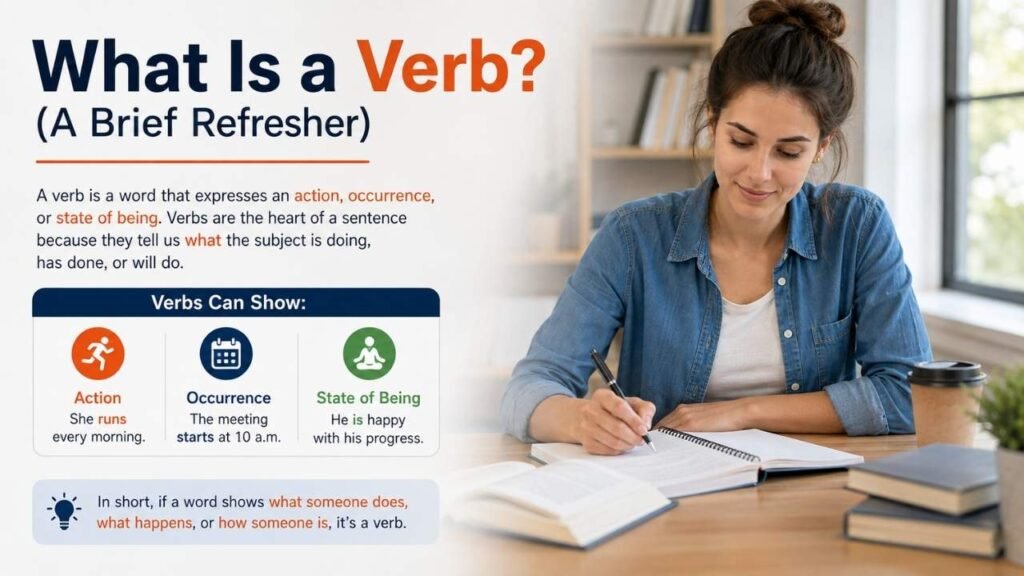
A verb is a doing word or action word that shows what a person, animal, or thing does, feels, or becomes. It is one of the most important parts of English grammar because every complete sentence needs a verb.
For example, in the sentence “She creates beautiful art,” the word creates is the verb because it tells us what she does. Learning English verbs helps you speak, write, and communicate more clearly. In this guide, you’ll discover a complete list of verbs that start with C, including common verbs, action verbs, and powerful verbs with meanings and examples.
If you enjoy learning about English words, you may also like our guide on Message vs Messege, which explains another commonly confused term.
Complete List of Verbs That Start With C
This complete list of verbs that start with C is a great way to build your English vocabulary. Whether you’re searching for verbs beginning with C for school, writing, or daily conversation, an organized list makes learning easier.
Some of the most useful C verbs include call, care, carry, catch, celebrate, change, choose, clean, climb, close, collect, combine, compare, complete, continue, cook, copy, correct, count, create, cross, cry, and cut.
Each of these English verbs describes an action, process, or state. As you continue reading, you’ll find verb meanings, example sentences, and special categories that help you choose the right verb for every situation.
50 Most Common Verbs That Start With C
Many common verbs that start with C appear in everyday conversations, emails, classrooms, and workplaces. Words like call, come, care, carry, catch, change, check, choose, clean, climb, close, collect, compare, complete, continue, cook, copy, count, create, cross, and cut are used regularly by native English speakers.
Learning these everyday verbs can improve your speaking and writing skills. Instead of memorizing long lists, try using each verb in a simple sentence. This helps you remember its meaning and correct usage.
If you’re interested in other commonly confused English expressions, don’t miss our guide on You Faring or Fairing, where we explain the correct spelling and usage with clear examples.
Action Verbs That Start With C
Action verbs that start with C describe physical or mental activities. They help make your writing more active, clear, and engaging. Some useful examples include climb, catch, carry, chase, clap, clean, collect, cook, crawl, carve, connect, construct, calculate, copy, crash, cross, and create.
These action words are perfect for stories, essays, reports, and everyday communication because they show exactly what someone is doing. For example, instead of saying “He was busy,” you can write “He constructed a model,” which paints a clearer picture.
Using strong English verbs also makes your sentences more interesting and improves your overall writing vocabulary.
Positive Verbs That Start With C
Positive verbs that start with C express helpful, kind, or encouraging actions. They are excellent choices for professional writing, personal messages, speeches, and everyday conversations. Popular examples include care, celebrate, comfort, congratulate, encourage, cherish, cooperate, connect, contribute, cultivate, and compliment.
These positive C verbs help create a friendly and respectful tone while making your writing more meaningful. For instance, saying “She encouraged her classmates” sounds much stronger than simply saying “She talked to them.”
Whether you’re writing an email, a resume, or a story, choosing powerful verbs with positive meanings can leave a better impression on your readers and improve your communication skills.
Powerful and Strong Verbs That Start With C
Using powerful verbs that start with C can make your writing more confident and persuasive. These verbs replace weak or general words with more specific actions. Strong examples include conquer, command, construct, convince, collaborate, calculate, compose, conquer, contribute, cultivate, challenge, and create.
These strong verbs are useful in essays, business documents, creative writing, and presentations because they clearly show purpose and action. For example, instead of writing “She helped the team,” you could say “She coordinated the team,” which gives a more precise meaning.
Choosing descriptive verbs helps readers understand your message quickly while making your writing sound more natural and engaging.
Business and Professional Verbs That Start With C
In the workplace, using the right business and professional verbs that start with C makes your communication clearer and more effective. Common examples include collaborate, communicate, consult, coordinate, calculate, confirm, contribute, compile, contract, conduct, classify, complete, and create.
These professional verbs are often used in emails, meetings, reports, and resumes because they describe important workplace actions. For example, you might write “She coordinated the project successfully” or “They collaborated on a new marketing plan.”
Learning these English verbs can improve your professional vocabulary and help you express your ideas with confidence. They are also useful for students preparing for future careers or business communication.
Academic and Formal Verbs That Start With C
Academic and formal verbs that start with C are commonly used in essays, research papers, reports, and professional writing. They help explain ideas in a clear and organized way. Useful examples include calculate, classify, clarify, compare, compile, conclude, conduct, confirm, consider, construct, consult, and cite.
These English verbs are especially valuable for students, teachers, and researchers because they make writing sound more precise and professional. For example, instead of writing “Think about the results,” you can write “Consider the results.”
Learning these formal verbs will strengthen your writing vocabulary and help you communicate your ideas with confidence in both academic and workplace settings.
Verbs That Start With C for Kids and Beginners
Learning verbs that start with C for kids and beginners is an easy way to build a strong vocabulary. Start with simple action words that children hear and use every day. Common examples include call, clap, clean, climb, cry, catch, cook, count, color, carry, crawl, and cut.
These common verbs that start with C are easy to understand and remember because they describe familiar actions. Encourage children to use each verb in a short sentence, such as “I clap my hands” or “We cook dinner together.”
Practicing these English verbs through reading, speaking, and writing helps beginners improve their language skills and gain confidence in everyday communication.
How to Use C Verbs Correctly in Sentences
Knowing verbs beginning with C is helpful, but using them correctly is even more important. Always choose a verb that matches the meaning of your sentence. For example, write “She created a beautiful painting,” instead of “She made a beautiful painting,” if you want a stronger expression. Likewise, “They celebrated the victory” is more specific than “They enjoyed the victory.”
Pay attention to the correct verb forms, including present, past, and past participle, to keep your grammar accurate. Reading books, practicing short sentences, and learning verb meanings with examples will help you use English verbs naturally in both speaking and writing.
Common Mistakes When Using Verbs That Start With C
Many learners make simple mistakes when using verbs that start with C. One common error is choosing the wrong verb because two words have similar meanings. Another mistake is using the wrong verb form, such as writing “He choose the answer” instead of “He chose the answer.”
Some writers also confuse verbs with nouns or adjectives, which can change the meaning of a sentence. To avoid these errors, always check the meaning, grammar, and context before using a verb.
Reading example sentences and practicing regularly will improve your understanding of English grammar and help you use common C verbs more accurately and confidently.
FAQs
What are verbs that start with C?
Verbs that start with C are action words that begin with the letter C, such as call, catch, clean, choose, create, and celebrate.
What are some common verbs that start with C?
Some common verbs include call, come, care, carry, catch, clean, climb, close, compare, continue, cook, create, and cut.
What are positive verbs that start with C?
Popular positive verbs include care, celebrate, comfort, congratulate, cooperate, contribute, cherish, and compliment.
Why should I learn verbs beginning with C?
Learning verbs beginning with C improves your English vocabulary, writing, speaking, and overall communication skills.
Conclusion
Building your knowledge of verbs that start with C is a simple but effective way to improve your English vocabulary and writing skills. From common verbs used in daily conversations to action verbs, positive verbs, powerful verbs, and academic verbs, each word helps you express ideas more clearly.
Instead of memorizing long lists, practice using new verbs in short sentences so they become part of your everyday language. Over time, you’ll speak and write with greater confidence and accuracy.
Keep this complete list of verbs that start with C as a handy reference whenever you need the right word for school, work, creative writing, or everyday communication.