Even Though vs Eventhough: Meaning, Rules & Examples
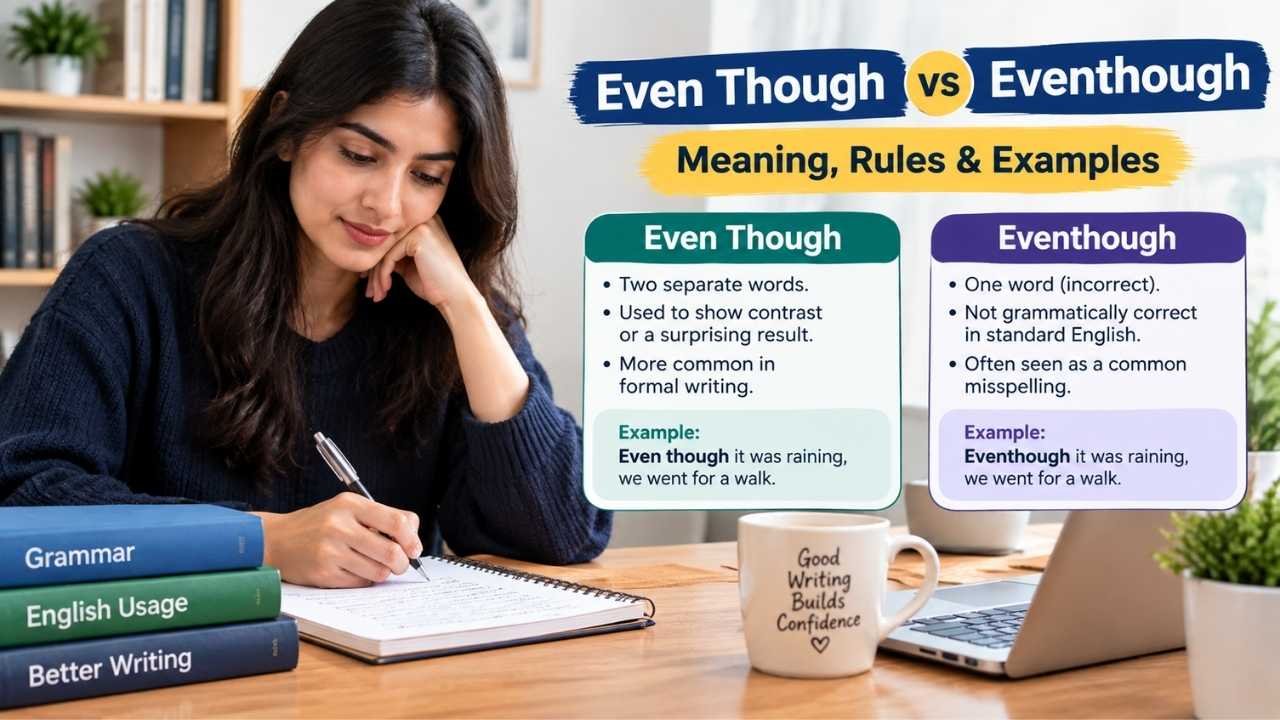
Have you ever wondered whether “eventhough” or “even though” is the correct spelling?

Have you ever wondered whether “eventhough” vs “even though” is the correct spelling? Many English learners and writers get confused because both versions sound the same when spoken. However, only one form is accepted in standard English.  Understanding the difference between eventhough vs even though can help you avoid common grammar mistakes and improve your … Read more

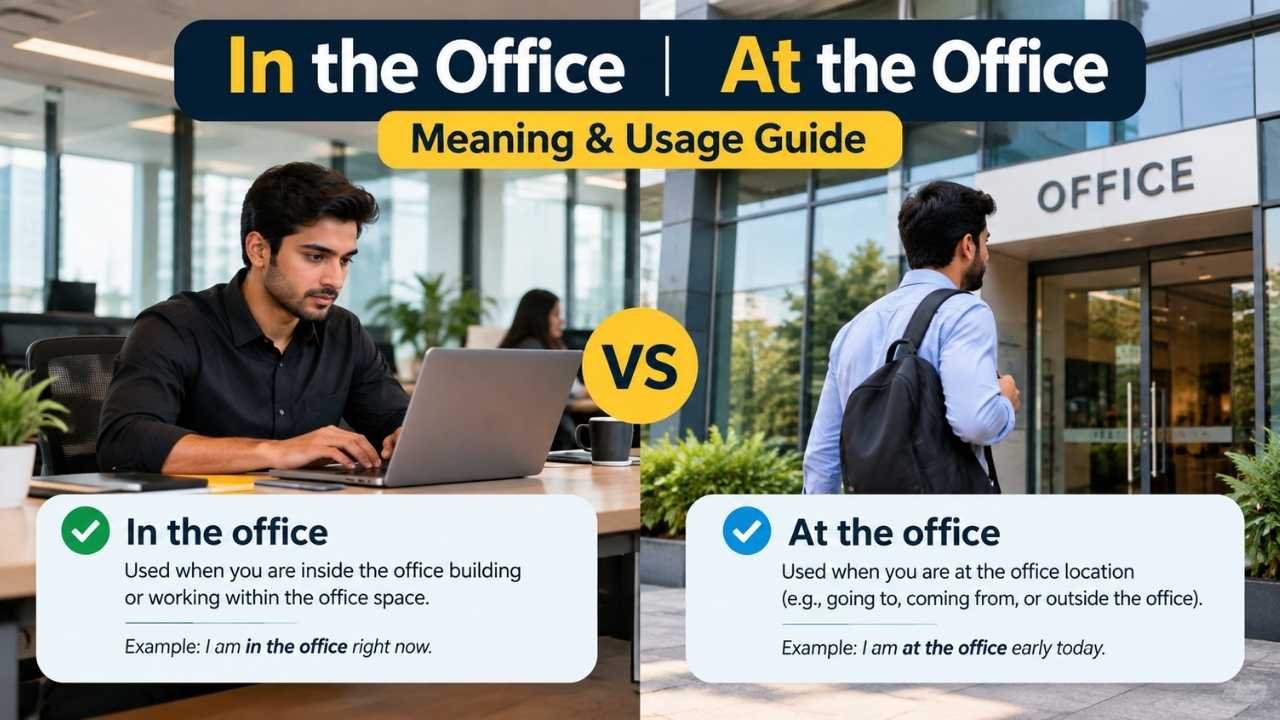
In the Office vs At the Office: Meaning & Usage Guide

Many English learners often wonder whether they should say “in the office” or “at the office.”

Many English learners often wonder whether they should say “in the office” vs “at the office.” Both phrases are correct, but they are used in slightly different situations.  The confusion happens because both expressions talk about a person’s location, yet the focus changes depending on the meaning and context. Understanding the difference between in the … Read more

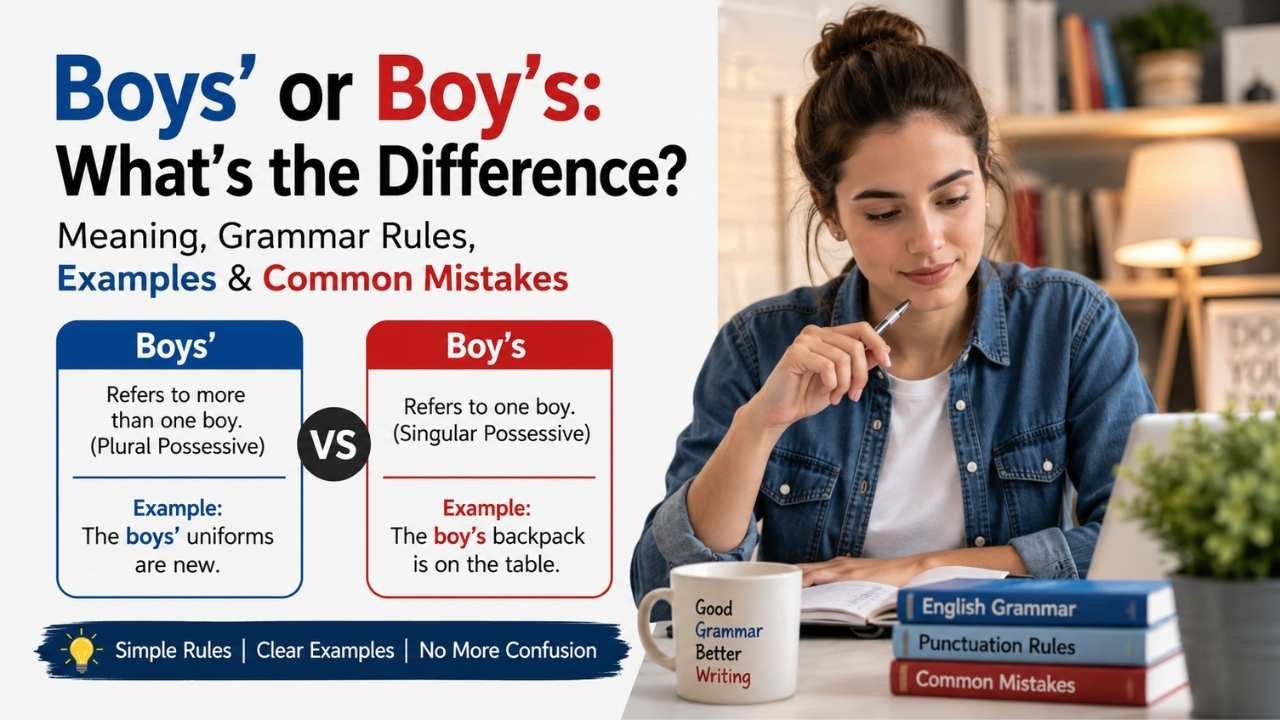
Boys’ or Boy’s: Meaning, Grammar Rules & Examples

Understanding the difference between Boys' and Boy's can be confusing, especially if you're learning English grammar or trying to improve your writing.

Understanding the difference between Boys’ and Boy’s can be confusing, especially if you’re learning English grammar or trying to improve your writing. Both forms are correct, but they have different meanings because they follow different apostrophe rules.  Knowing when to use Boy’s and when to use Boys’ helps you show ownership correctly and avoid common … Read more

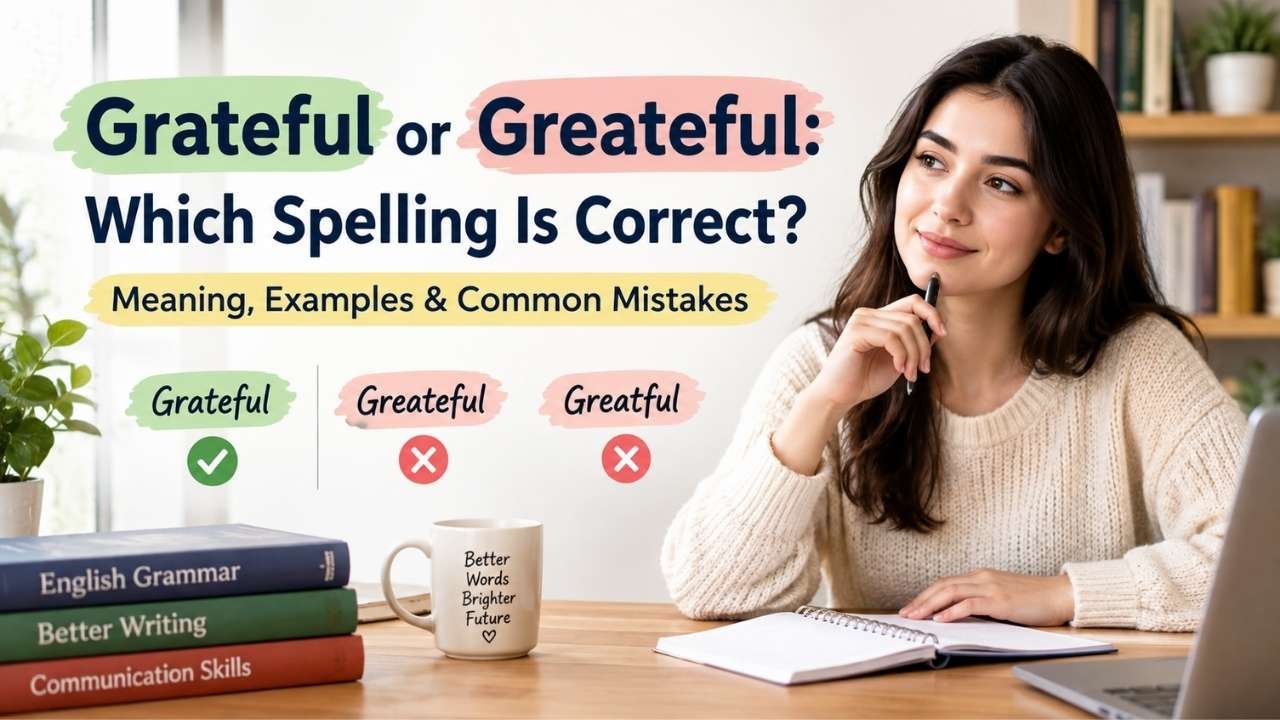
Grateful or Greateful: Which Spelling Is Correct?

However, the correct spelling is grateful, while greateful and greatful are incorrect and do not appear in standard dictionaries.

Have you ever paused while typing and wondered whether the correct spelling is grateful, greateful, or greatful? You’re not alone. This is one of the most common spelling mistakes in English because many people assume the word should be linked to “great.”  However, the correct spelling is grateful, while greateful and greatful are incorrect and … Read more

Suggest vs Recommend: Meaning, Differences & Examples

Understanding the difference between Suggest Vs Recommend can improve both your speaking and writing.

Understanding the difference between Suggest Vs Recommend can improve both your speaking and writing. Although these verbs are often used in similar situations, they do not always have the same meaning or level of strength.  Knowing the difference between suggest and recommend helps you choose the right word in conversations, emails, school assignments, and professional … Read more

Sale vs Sell: Meaning, Differences, Grammar & Examples

Have you ever wondered whether you should use sale or sell in a sentence?

Have you ever wondered whether you should use sale vs sell in a sentence? Although these words look and sound similar, they have different meanings and different grammar roles.  Understanding the difference between sale and sell can help you avoid common English mistakes in both everyday conversations and professional writing. In simple terms, sale is … Read more

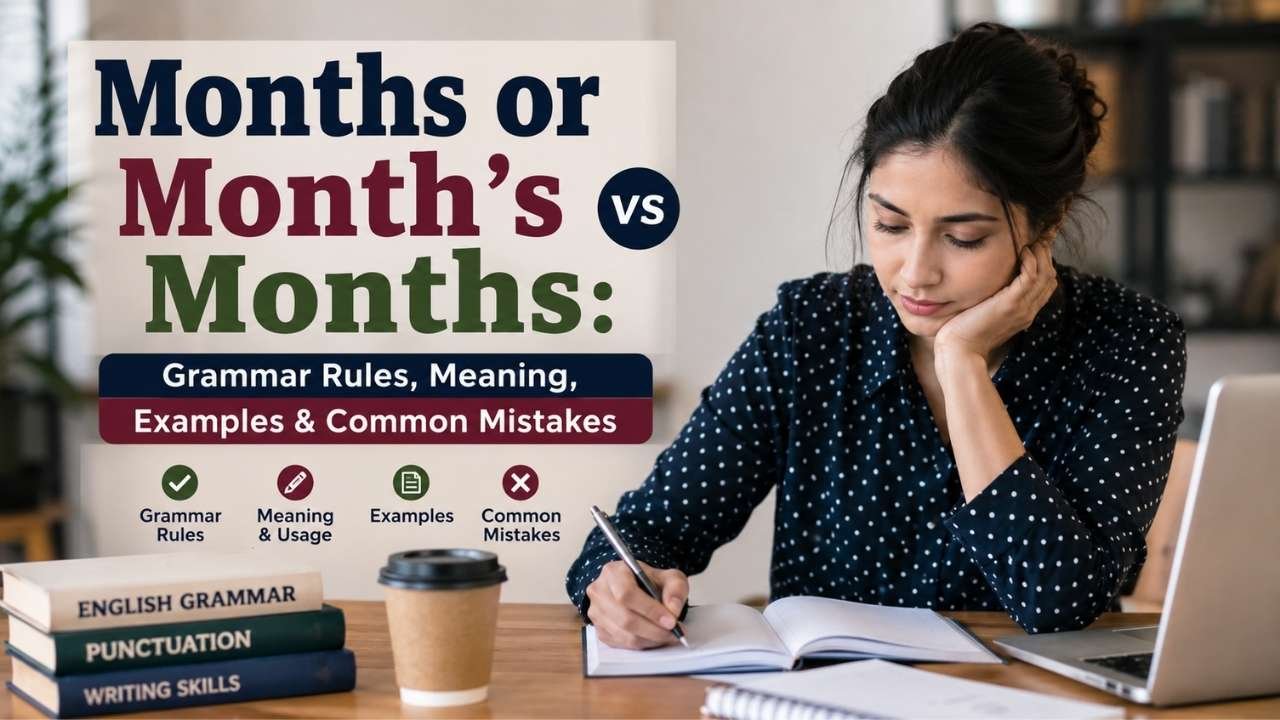
Months or Month’s vs Months: Meaning, Rules & Examples

Many writers get confused when deciding whether to write months or month's, vs months'.

Many writers get confused when deciding whether to write months, or month’s, vs months’. Although these words look similar, each has a different grammar purpose. Knowing the difference can help you avoid common grammar mistakes, improve your English writing, and use apostrophe rules correctly in emails, school assignments, business documents, and everyday conversations.  In this … Read more

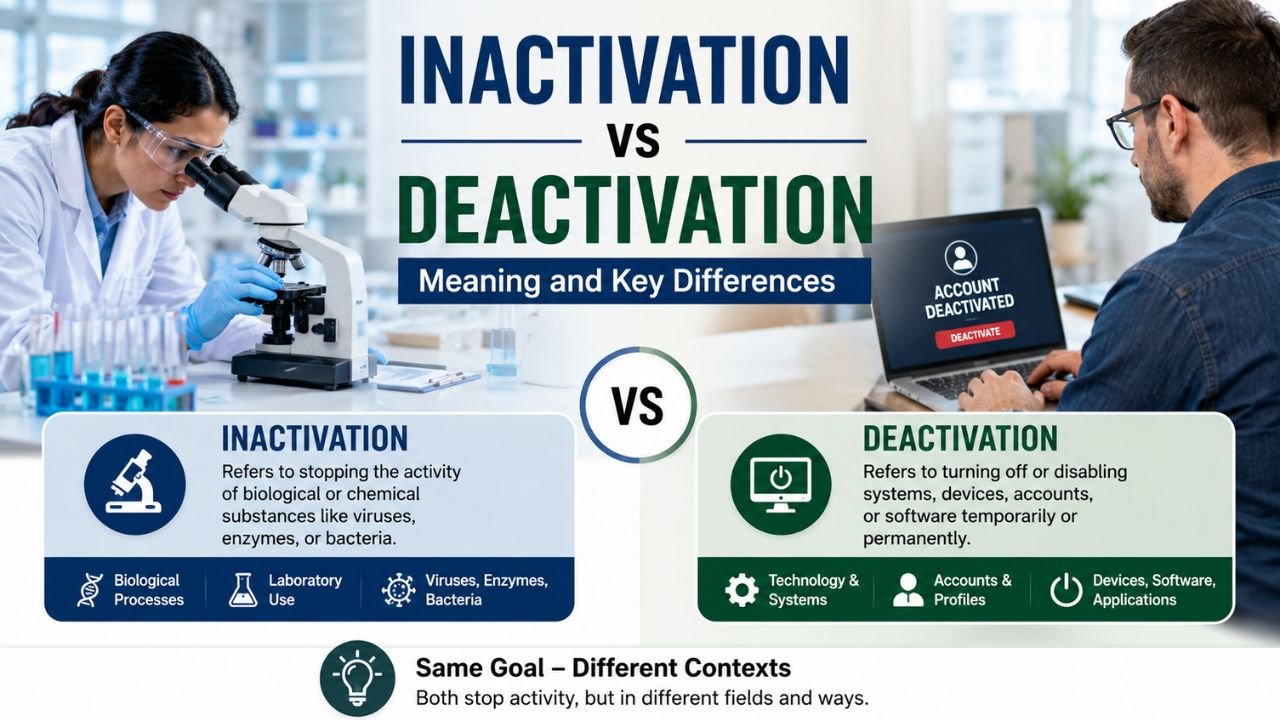
Inactivation vs Deactivation Meaning and Key Differences 

Understanding Inactivation vs. Deactivation can be confusing because the two words seem similar, yet they are used in different ways.

Understanding Inactivation vs. Deactivation can be confusing because the two words seem similar, yet they are used in different ways. The difference between inactivation and deactivation mainly depends on context. In biology, chemistry, and biotechnology, inactivation usually means stopping the activity of a virus, enzyme, protein, or other biological material without necessarily removing it.  Deactivation, … Read more