
Have you ever wondered whether you should write freshman vs freshmen? These two words look almost the same, but they have different meanings and uses in English grammar. Knowing the difference between freshman and freshmen helps you avoid common writing mistakes and communicate more clearly.
Simply put, freshman is the singular noun used for one first-year student, while freshmen is the plural noun used for two or more students. In this guide, you’ll learn the freshman vs freshmen grammar rule, explore their meanings, discover when to use freshman and when to use freshmen, and see plenty of real-life examples.
We’ll also cover common mistakes, helpful grammar tips, and a few easy tricks to remember the correct usage, making this guide useful for students, teachers, writers, and English learners alike.
Quick Answer
Freshman is the singular form and refers to one first-year student, while freshmen is the plural form used for two or more first-year students. Understanding the freshman vs freshmen difference is simple: use freshman for one person and freshmen for a group. Using the correct word improves your English grammar and makes your writing clear and accurate.
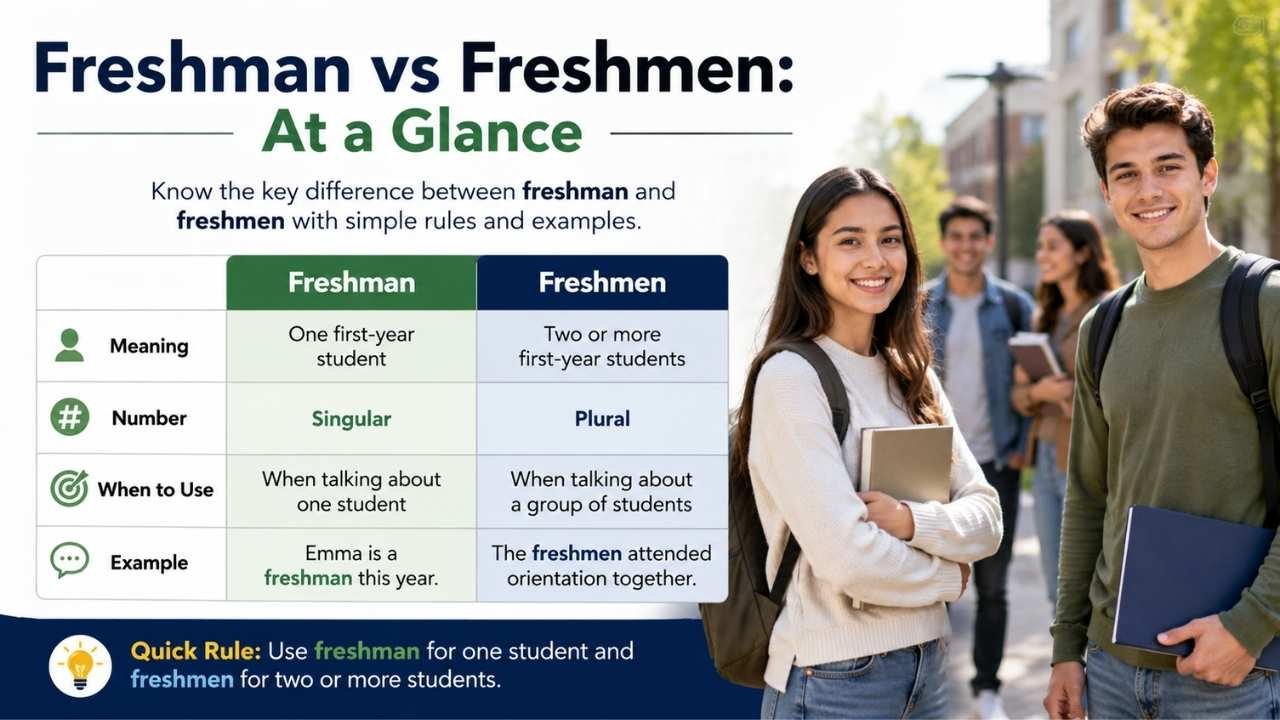
Freshman vs Freshmen: At a Glance
Understanding the freshman vs freshmen difference is easier than you might think. The word freshman is a singular noun that refers to one first-year student, while freshmen is the plural noun used for two or more first-year students. This simple grammar rule helps you choose the correct word in school assignments, emails, and everyday writing. If you are unsure when to use freshman or when to use freshmen, the table below makes it clear.
| Word | Meaning | Number | Example |
| Freshman | One first-year student | Singular | Emma is a freshman this year. |
| Freshmen | Two or more first-year students | Plural | The freshmen attended orientation together. |
Learning this comparison will improve your English grammar, strengthen your writing, and help you avoid common grammar mistakes.
What Does “Freshman” Mean?
A freshman is one first-year student who has just started studying at a high school, college, or university. Since it is a singular noun, you use it when talking about only one person. For example, you can say, “My brother is a freshman,” because you are referring to one student.
Many people search for the freshman meaning or wonder, “Is freshman singular?” The answer is yes. Knowing the correct freshman definition makes your writing more accurate and easier to understand. If you enjoy learning about confusing English words, you may also like our guide on Eventhough Vs Even Though, which explains another common grammar mistake in simple language.
What Does “Freshmen” Mean?
Freshmen is the plural form of freshman and refers to two or more first-year students. You should use this word whenever you are talking about a group instead of one person. For example, “The freshmen met their teachers on the first day of school” is correct because it mentions several students.
Many English learners ask about the freshmen meaning or wonder, “Is freshmen plural?” The answer is always yes. Understanding this simple rule helps you avoid grammar errors and improves your English usage. Once you know the difference between freshman and freshmen, choosing the correct word becomes much easier in everyday conversations and academic writing.
Freshman vs Freshmen: What’s the Difference?
The biggest difference between freshman and freshmen is the number of students being discussed. Use freshman when talking about one first-year student, and use freshmen when talking about two or more first-year students. Although the words look very similar, using the wrong one is a common grammar mistake.
Think of freshman vs freshmen as the same pattern as man and men. This simple comparison makes the grammar rule easy to remember. If you enjoy learning the correct way to use English expressions, you might also find our article on Respond To A Pity Invite helpful, as it explains another topic with practical examples and clear language.
When Should You Use Freshman?
You should use freshman whenever you are talking about one first-year student. Since it is a singular noun, it always refers to a single person. For example, “Olivia is a freshman at the university” and “The freshman joined the basketball team” are both correct. If you are asking when to use freshman, simply check whether your sentence mentions only one student.
This easy rule will help you use the correct word every time. Learning the proper freshman grammar rules also improves your academic writing, emails, and classroom assignments. Using the correct form shows that you understand English grammar and pay attention to small but important details.
When Should You Use Freshmen?
Use freshmen whenever you are referring to two or more first-year students. Because it is a plural noun, it always describes a group. For example, “The freshmen welcomed new classmates during orientation” and “Several freshmen volunteered for the school event” are both correct.
If you are wondering when to use freshmen, remember this simple rule: if more than one student is involved, choose freshmen. This grammar tip makes it easy to avoid common writing mistakes. Understanding the freshman vs freshmen grammar rule also helps students, teachers, and English learners write with confidence while improving their overall English usage and communication skills.
Common Mistakes People Make
Many people mix up freshman and freshmen because the words look almost the same. The most common mistake is using freshmen for one student or freshman for a group. For example, “She is a freshmen” is incorrect because freshmen is the plural noun. The correct sentence is “She is a freshman.”
Another mistake is writing “The freshman are excited,” when it should be “The freshmen are excited.” Before choosing a word, ask yourself how many students you are talking about. If it is one, use freshman. If it is two or more, use freshmen. This simple habit will improve your English grammar and help you avoid common writing errors.
What Is the Difference Between Freshman vs Freshmen in Sentences?
Seeing freshman vs freshmen examples in real sentences makes the grammar rule much easier to understand. Here are a few examples that show the correct usage.
Using Freshman (Singular):
- My sister is a freshman at college.
- The freshman joined the science club.
- Every freshman received a welcome guide.
Using Freshmen (Plural):
- The freshmen attended orientation together.
- Many freshmen signed up for sports teams.
- The freshmen were excited about their first semester.
If you remember that freshman refers to one first-year student and freshmen refers to more than one, you will use both words correctly in conversations, school assignments, and professional writing.
Freshman, Freshmen, and First-Year Student
Today, many schools and universities use first-year student instead of freshman. This phrase is considered more gender-neutral because it does not include the word “man.” Even so, freshman and freshmen are still correct and widely understood in many places. If your school or workplace prefers inclusive language, using first-year student is often the better choice.
For example, instead of saying, “Every freshman must attend orientation,” you can say, “Every first-year student must attend orientation.” Knowing these options helps you choose the most appropriate wording for different situations while keeping your English usage clear, respectful, and modern.
Easy Memory Trick to Remember the Difference
A simple memory trick can help you remember the difference between freshman and freshmen. Look at the endings of the words. Freshman ends with “man,” which reminds you of one person. Freshmen ends with “men,” which reminds you of more than one person.
This is the same pattern used in other English words like man → men and woman → women. Whenever you feel unsure, think about how many students you are talking about. If it is one, choose freshman. If it is a group, choose freshmen. This easy trick makes the freshman vs freshmen grammar rule much easier to remember and apply.
Mini Grammar Quiz
Test your knowledge with this quick quiz. Try to answer each question before checking the answers.
Emma is a ______ at the university.
a) freshman
b) freshmen
The ______ met their professors today.
a) freshman
b) freshmen
Which sentence is correct?
a) He is a freshmen.
b) He is a freshman.
Answers:
- a) freshman
- b) freshmen
- b) He is a freshman.
If you answered all three correctly, you now understand when to use freshman and when to use freshmen with confidence.
FAQs
Is freshman singular or plural?
Freshman is singular and refers to one first-year student.
Is freshmen singular or plural?
Freshmen is plural and refers to two or more first-year students.
Can I say “a freshmen”?
No. Saying “a freshmen” is incorrect. The correct phrase is “a freshman.”
What is the plural of freshman?
The plural of freshman is freshmen.
Is freshman used in both college and high school?
Yes. The word freshman can describe a first-year student in both high school and college, depending on the context.
Is first-year student better than freshman?
Many schools now prefer first-year student because it is gender-neutral, but freshman is still a correct and commonly used term.
Why do people confuse freshman and freshmen?
People often confuse them because the spellings are very similar. Remember that freshman is singular, while freshmen is plural.
Conclusion
The freshman vs freshmen difference is simple once you understand the basic grammar rule. Use freshman when talking about one first-year student and freshmen when referring to two or more first-year students.
Paying attention to this small detail will make your English grammar more accurate and your writing more professional. If you ever forget, use the memory trick: “man” means one, and “men” means many.
With regular practice, sentence examples, and the tips in this guide, you can confidently choose the correct word every time and avoid one of the most common English grammar mistakes.