

If you’ve ever wondered whether “totaled” or “totalled” is the correct spelling, you’re not alone. Many English learners and writers search for the difference between totaled vs. totalled because both forms appear in books, websites, and everyday writing.
The good news is that both spellings are correct, but they are used in different types of English. American English usually prefers “totaled,” while British English uses “totalled.”
Understanding this small spelling difference can help you write more confidently and avoid common mistakes. In this guide, you’ll learn the meaning, grammar rules, British vs. American English differences, practical usage examples, and easy tips to remember the correct spelling. By the end, you’ll know exactly when to use totaled and when to use totalled in any writing situation.
Quick Answer
Both “totaled” and “totalled” are correct, but they follow different regional spelling rules. “Totaled” is the preferred spelling in American English, while “totalled” is used in British English and other varieties of English. They have the same meaning—usually referring to something being added up or completely destroyed, especially a vehicle. Use the spelling that matches your audience.
What Does “Totaled” Mean?
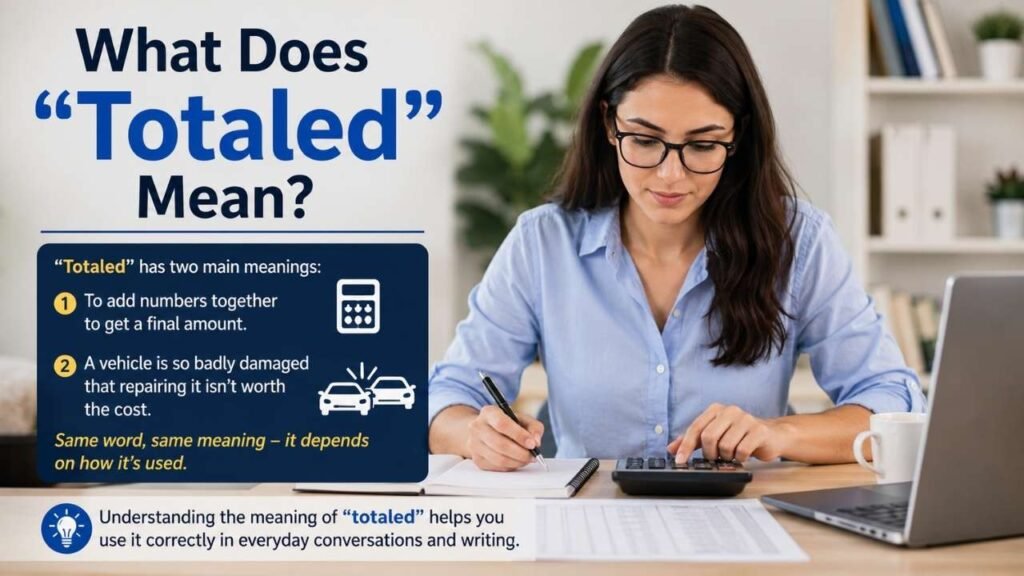
“Totaled” is the American English spelling of the past tense and past participle of the verb “total.” It has two common meanings. First, it can mean to add numbers together to find the final amount.
For example, She totaled the expenses for the month. Second, it often means a vehicle has been damaged so badly that repairing it is not worth the cost. For example, The car was totaled after the accident.
This spelling is the standard choice in the United States and appears in dictionaries such as Merriam-Webster. If you are writing for an American audience, totaled is the correct spelling to use. Knowing this helps you avoid common spelling mistakes and improve your English writing.
What Does “Totalled” Mean?
“Totalled” is the British English spelling of the same verb. Its meaning is exactly the same as totaled. It can describe adding up figures or a vehicle that has been completely damaged. The only difference is the regional spelling.
In the United Kingdom, Canada, Australia, and many other countries that follow British spelling conventions, totalled is the preferred form. The extra “l” follows a common British spelling pattern when adding “-ed” to certain verbs. If your readers use British English, writing totalled makes your content look natural and correct.
Understanding this distinction makes it easier to choose the right spelling for different audiences and writing styles.
Totaled vs. Totalled: What’s the Difference?
The main difference between totaled vs. totalled is where each spelling is used, not what it means. Both words are the past tense and past participle of “total.” Totaled is the standard spelling in American English, while totalled is preferred in British English.
Their pronunciation, definition, and usage are the same. The only change is the number of “l” letters. If you are writing for readers in the United States, use totaled. If your audience is in the United Kingdom or follows British spelling, choose totalled.
This is similar to other spelling differences in English, just as people often confuse To Bad or Too Bad, where one small spelling change completely affects correctness.
Why American and British English Spell Them Differently
The difference between totaled and totalled comes from the spelling traditions of American English and British English. American English often simplifies words by using one “l” before adding “-ed.” British English usually keeps two “l” letters when a verb ends with a vowel followed by “l.”
This is why Americans write totaled, while British writers prefer totalled. Neither spelling is wrong—they simply follow different language standards. Many English words show the same pattern, making regional spelling an important part of grammar.
Just as the saying Cream Rises to the Top reminds us that quality stands out, choosing the correct spelling for your audience helps your writing appear polished, professional, and easy to understand.
The Double-L Spelling Rule Explained
The double-L spelling rule explains why totalled has two “l” letters in British English. When many British verbs end with a vowel followed by “l,” the final “l” is doubled before adding endings like “-ed” or “-ing.”
That creates spellings such as travelled, cancelled, labelled, and totalled. In American English, these words are usually written with a single “l,” giving us traveled, canceled, labeled, and totaled. This spelling rule is one of the biggest differences between British and American English.
Learning this simple pattern helps you spell many words correctly, not just totaled or totalled, and improves your confidence when writing in either variety of English.
When Should You Use “Totaled”?
Use “totaled” whenever you are writing in American English or for readers in the United States. It is the preferred spelling in American newspapers, schools, businesses, and dictionaries like Merriam-Webster. You can use totaled when talking about adding numbers together or describing a vehicle that has been damaged beyond repair.
For example, The accountant totaled the yearly sales before preparing the report. Another example is, The insurance company declared the car totaled after the accident. If your audience mainly uses American English, choosing totaled keeps your writing consistent and professional.
Following the correct regional spelling also helps avoid confusion and shows that you understand standard English grammar and usage.
When Should You Use “Totalled”?
Choose “totalled” if you are writing in British English or for readers in the United Kingdom, Australia, New Zealand, or other countries that follow British spelling conventions. Like totaled, it means to calculate a final amount or to describe something, especially a vehicle, as completely damaged.
For example, She totalled the expenses before submitting the budget. Another sentence is, The car was totalled in the road accident. Using totalled is not more correct than totaled—it simply matches British spelling rules.
Before publishing your work, think about who will read it and keep the same spelling style throughout the article for a polished and consistent result.
Side-by-Side Comparison Table
The table below makes the difference between totaled vs totalled easy to understand. Although the spellings are different, their meaning, pronunciation, and grammar are exactly the same. The only difference is the variety of English you are using.
| Feature | Totaled | Totalled |
| Preferred English | American English | British English |
| Meaning | Added up or completely damaged | Added up or completely damaged |
| Pronunciation | Same | Same |
| Grammar | Past tense and past participle of total | Past tense and past participle of total |
| Common Usage | United States | United Kingdom, Australia, Canada, and others |
Always choose the spelling that matches your audience and remain consistent throughout your writing.
Example Sentences in Everyday English
Reading examples is one of the easiest ways to remember the correct spelling. Here are a few simple sentences. American English: The mechanic said the truck was totaled after the crash. Maria totaled all the receipts before creating the report. British English:
The insurance company confirmed the car was totalled. The cashier totalled the customer’s bill quickly. Notice that the action and meaning stay the same in every sentence. Only the spelling changes depending on the type of English being used.
Practicing these examples can help you use totaled vs totalled naturally in emails, school assignments, reports, and everyday conversations.
Common Mistakes People Make
One common mistake is mixing American English and British English in the same document. For example, writing totaled in one paragraph and totalled in another can make your writing look inconsistent.
Another mistake is believing that one spelling is always wrong. In reality, both are correct when used for the right audience. Some writers also think the words have different meanings, but they do not. Whether you use totaled or totalled, the definition stays the same.
To avoid mistakes, decide which variety of English you are using before you start writing. Then stick with that spelling throughout your article, essay, business report, or email for a clear and professional result.
Easy Memory Trick to Remember the Correct Spelling
A simple memory trick can help you remember which spelling to use. Think of “America = one L,” so choose totaled when writing in American English. Then remember “Britain = two Ls,” so use totalled in British English.
This small trick works for many similar words, such as traveled/travelled, canceled/cancelled, and labeled/labelled. You do not need to memorize every spelling separately. Just remember the regional pattern.
If you are ever unsure, check who your readers are or look at the style guide your school, company, or publisher follows. This habit will help you choose the correct spelling every time.
How Major Dictionaries Spell the Word
Leading dictionaries agree that both “totaled” and “totalled” are correct. The difference depends on the variety of English being used. Merriam-Webster lists totaled as the standard American English spelling.
Dictionaries such as Cambridge, Collins, and the Oxford English Dictionary recognize totalled as the preferred British English form while also acknowledging the American variant. This shows that neither spelling is incorrect.
Instead, each follows its own regional spelling convention. If you are writing for an international audience, choose one style and use it consistently from beginning to end. Consistency is more important than choosing one spelling over the other.
FAQs
Is “totaled” or “totalled” correct?
Both are correct. Totaled is used in American English, while totalled is preferred in British English.
Do “totaled” and “totalled” have different meanings?
No. Both words have the same meaning. They can refer to adding up numbers or a vehicle being damaged beyond repair.
Why does British English use “totalled” with two Ls?
British English follows a spelling rule that often doubles the final “l” before adding “-ed” to certain verbs.
Should I use both spellings in one article?
No. Choose either American English or British English and use that spelling consistently throughout your writing.
Conclusion
The answer to “totaled vs. totalled” is simple: both spellings are correct, but each belongs to a different variety of English. Use totaled if you are writing for an American English audience.
Choose totalled if your readers use British English. Their meaning, pronunciation, grammar, and usage are the same, so the only difference is regional spelling. Understanding this rule will help you avoid common spelling mistakes and write with confidence.
Whenever you are unsure, think about your audience, follow one spelling style consistently, and check a trusted dictionary if needed. By doing this, your writing will remain accurate, professional, and easy for readers to understand.