
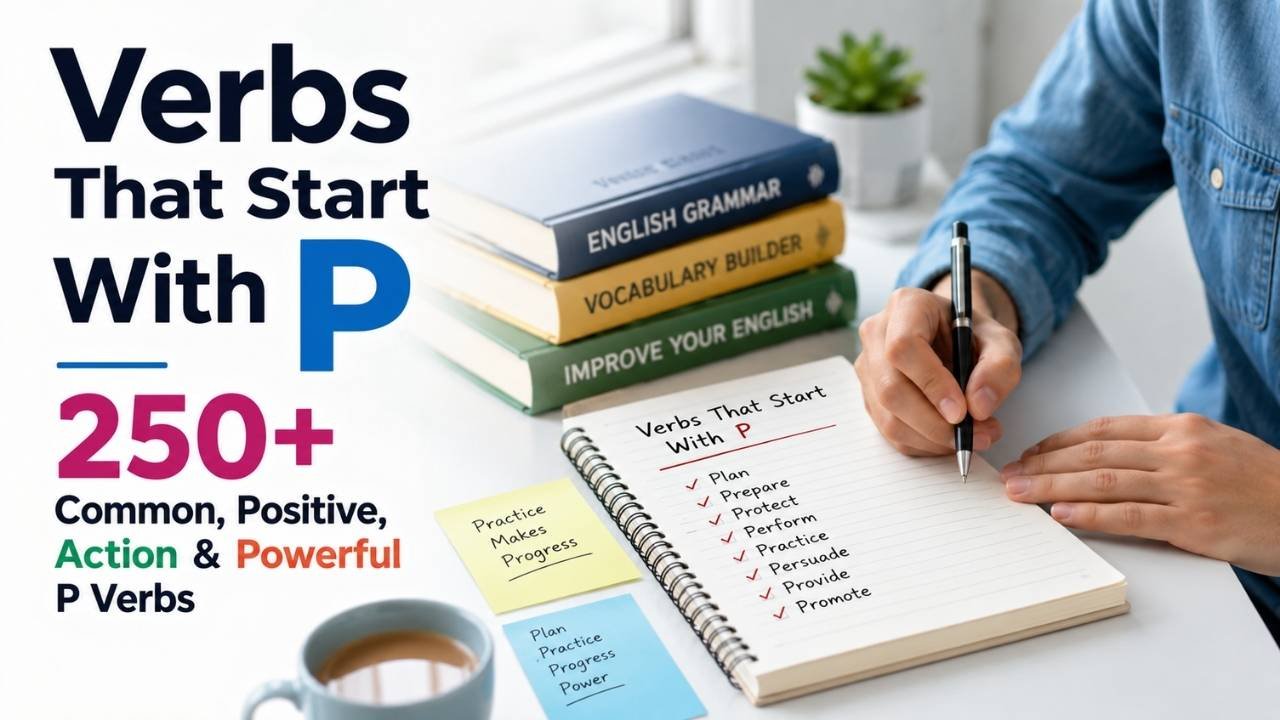
If you’re looking for verbs that start with P, you’ve come to the right place. Whether you’re a student, teacher, writer, or English learner, knowing more P verbs can improve your vocabulary and make your speaking and writing more effective.
This guide brings together a complete list of verbs that start with P, including common verbs that start with P, positive verbs that start with P, action verbs that start with P, and even powerful verbs that start with P. You’ll also find verbs that start with P with meanings, easy explanations, and practical example sentences to help you understand how each word is used.
Whether you need English verbs beginning with P for school, creative writing, professional communication, or everyday conversations, this easy-to-read resource is designed to help you learn, remember, and confidently use these useful verbs.
Quick Answer
Verbs that start with P are action words that begin with the letter P. They describe actions, processes, or states of being, such as play, practice, protect, prepare, and perform. This guide includes a complete list of verbs that start with P, featuring common, positive, action, and powerful P verbs with meanings and example sentences to help improve your English vocabulary and writing skills.
What Is a Verb?
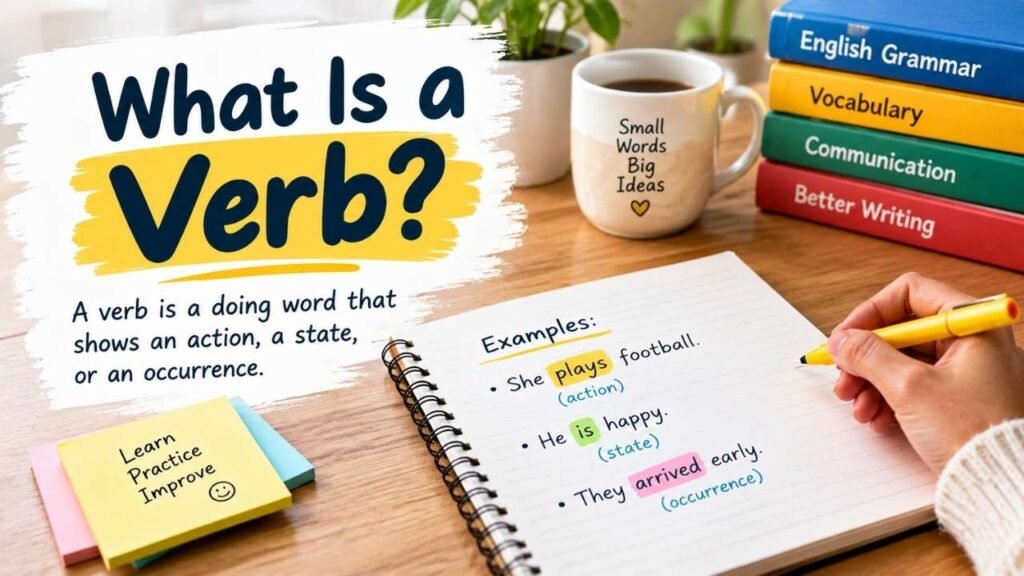
A verb is a doing word or a word that describes an action, state, or occurrence. Every complete sentence needs a verb because it tells us what someone or something does, feels, or becomes.
For example, in the sentence “She plays football,” the word plays is the verb. Learning English verbs is an important step in building strong grammar and improving communication. When you understand verbs beginning with P and other letters, you can create more interesting and accurate sentences.
Whether you are a student, teacher, writer, or English learner, expanding your vocabulary words with new verbs makes speaking and writing easier. It also helps you express ideas clearly in everyday conversations and professional communication.
What Are Verbs That Start With P?
Verbs that start with P are action words that begin with the letter P. They describe actions, processes, or states, making them useful in daily conversations, school assignments, and creative writing. Some common verbs that start with P include play, prepare, protect, perform, and paint.
These English verbs beginning with P can help you write more naturally and communicate your ideas with confidence. This guide includes a complete list of verbs that start with P, along with verbs that start with P with meanings and easy examples.
If you’re improving your vocabulary, exploring positive verbs that start with P, or searching for action verbs that start with P, this collection offers something valuable for every learner. For another spelling guide, read our article on Totaled vs. Totalled.
Verbs That Start With P (Complete Alphabetical List)
Below is a complete alphabetical list of verbs that start with P to help you expand your vocabulary. These P verbs include simple, common, and advanced words used in everyday English.
Some examples are pace, pack, paddle, paint, pair, park, participate, pass, paste, pat, pause, pay, peck, pedal, peel, perform, permit, persuade, pick, pinch, pin, place, plan, plant, play, plead, please, plug, point, polish, pop, pour, practice, pray, preach, predict, prefer, prepare, present, preserve, press, pretend, prevent, print, process, produce, program, promise, promote, pronounce, protect, prove, provide, publish, pull, pump, punch, punish, purchase, pursue, push, and many more.
As you continue reading, you’ll discover these verbs beginning with P grouped into helpful categories with meanings and examples.
Common Verbs That Start With P
Some common verbs that start with P appear regularly in conversations, books, and workplaces. Words like play, prepare, protect, provide, practice, perform, plan, print, push, and pay are used in many everyday situations.
Learning these P verbs first helps you build a stronger vocabulary because you’ll hear and use them often. For example, you might prepare a meal, play a game, provide information, or practice speaking English every day.
These English verbs starting with P are useful for students, professionals, and anyone improving language skills. Understanding their meanings and using them in real sentences will make your communication smoother and more natural. You can also explore our guide on Cream Rises to the Top to learn another useful English expression.
Positive Verbs That Start With P
Positive verbs that start with P express encouraging, helpful, and uplifting actions. They are excellent for conversations, motivational writing, resumes, and personal development. Examples include praise, protect, promote, prosper, provide, preserve, pardon, persevere, please, and participate.
These verbs show kindness, progress, support, and success, making your writing more meaningful and engaging. For instance, you can praise someone’s effort, promote a good idea, or protect the environment.
Using these powerful P verbs helps create a positive tone and leaves a strong impression on readers. Whether you’re writing an email, speech, or school assignment, adding these positive action verbs starting with P can make your message clearer, warmer, and more inspiring.
Action Verbs That Start With P
Action verbs that start with P describe physical or mental activities. They make sentences more lively by showing exactly what a person or object is doing.
Popular examples include push, pull, paint, perform, prepare, plant, pack, print, point, pick, pour, and practice. Instead of using weak descriptions, these action words beginning with P make your writing more vivid and interesting.
For example, you can say, “She planted flowers,” or “They performed on stage,” to create a clear picture for the reader. These verbs beginning with P are valuable for storytelling, academic writing, and everyday communication because they help readers easily understand the action taking place.
Powerful Verbs That Start With P
Powerful verbs that start with P make your writing stronger and more persuasive. They add confidence, energy, and purpose to your sentences. Words like persuade, prevail, produce, promote, preserve, prevent, perform, progress, protect, and prove are excellent choices for professional writing, presentations, and speeches.
For example, instead of saying someone “helped,” you might say they promoted a project or proved an important point. These powerful P verbs also improve resumes because they clearly describe achievements and responsibilities.
Choosing strong English verbs beginning with P helps your ideas stand out while making your writing more direct, confident, and memorable.
Business and Professional Verbs That Start With P
Business and professional verbs that start with P are useful in the workplace, meetings, reports, and resumes. They help you describe responsibilities and achievements clearly.
Popular examples include plan, prepare, present, produce, promote, provide, process, purchase, perform, predict, prioritize, propose, partner, and publish. These professional verbs that start with P make your writing sound confident without using difficult words.
For example, you can say, “She presented the report,” or “They processed customer orders quickly.” If you are writing a resume or business email, choosing these English verbs beginning with P highlights your skills and experience. Using strong verbs also makes your communication clearer, more organized, and easier for readers to understand.
Academic Verbs That Start With P
Academic verbs that start with P are commonly used in schools, colleges, research papers, and classroom discussions. They help explain ideas, describe results, and present information in a clear way. U
seful examples include predict, prove, present, publish, propose, paraphrase, participate, perceive, practice, perform, process, and prepare. These verbs beginning with P help students write better assignments and improve classroom communication. For example, you may propose a solution, present research findings, or prove an argument with evidence.
Learning these English verbs starting with P builds confidence in both writing and speaking. They are also valuable for teachers, researchers, and anyone who wants to communicate ideas accurately and effectively.
Phrasal Verbs That Start With P
Phrasal verbs that start with P combine a verb with a preposition or adverb to create a new meaning. They are very common in everyday English and make conversations sound more natural.
Examples include pick up, put off, pass away, pay back, pull over, point out, phase out, press on, pipe down, and pass by. Although some begin with different base verbs, these expressions are widely used and worth learning. For example, pick up can mean collecting something or learning a new skill, while point out means drawing attention to something.
Understanding these P phrasal verbs improves listening, speaking, and writing skills while helping you communicate more like a native English speaker.
Verbs That Start With P with Meanings and Example Sentences
Learning verbs that start with P with meanings becomes easier when you see them used in real sentences. Here are a few examples. Prepare means to get something ready: We prepared dinner before the guests arrived.
Protect means to keep someone or something safe: Trees protect the soil from erosion. Perform means to carry out an action: The students performed well in the competition.
Persuade means to convince someone: She persuaded her friend to join the team. Practice means to repeat an activity to improve: He practices the piano every evening. These P verbs with example sentences help you understand both the meaning and the correct way to use each word in daily life.
How to Use P Verbs in Writing, Speaking, and Resumes
Using verbs that start with P correctly can make your writing and speaking more interesting and effective. Instead of using the same simple verbs repeatedly, choose words that clearly describe your ideas.
For example, use present instead of “show,” produce instead of “make,” or persuade instead of “convince” when appropriate. In resumes, action verbs like planned, performed, promoted, and processed help employers understand your achievements quickly. In conversations, words like prepare, participate, and protect sound natural and clear.
Regularly practicing these action verbs that start with P will improve your vocabulary, boost your confidence, and help you communicate more effectively in school, work, and everyday situations.
Common Mistakes When Using P Verbs
Many English learners make small mistakes when using verbs beginning with P, but they are easy to avoid with practice. One common mistake is choosing the wrong verb for the situation.
For example, protect means to keep someone safe, while preserve means to keep something in its original condition. Another mistake is using the wrong verb tense, such as writing perform instead of performed when talking about the past.
Some learners also confuse similar words like practice and practise, depending on British or American English. Reading example sentences and using P verbs in daily writing will help you remember the correct forms and improve your grammar naturally.
FAQs
What are verbs that start with P?
They are action words that begin with the letter P, such as play, prepare, protect, and perform.
Why should I learn P verbs?
Learning verbs that start with P expands your vocabulary and improves your writing, speaking, and reading skills.
What are some common P verbs?
Popular examples include play, plan, practice, provide, prepare, push, protect, and perform.
What are positive verbs that start with P?
Some positive examples are praise, promote, prosper, please, provide, and persevere.
Are there powerful verbs that start with P?
Yes. Persuade, prevail, prove, protect, produce, and promote are strong and effective verbs.
How can I remember P verbs easily?
Practice them in sentences, group them by category, and use them regularly in conversations and writing.
Can I use P verbs in resumes?
Absolutely. Words like planned, performed, processed, presented, and promoted make resumes stronger and more professional.
Conclusion
Learning verbs that start with P is a simple way to build a stronger English vocabulary and improve your writing, speaking, and communication skills. From common verbs that start with P like play and prepare to positive, action, and powerful P verbs, each word helps you express your ideas more clearly.
By understanding their meanings and practicing them in everyday sentences, you’ll become more confident in using English. Keep this complete list of verbs that start with P as a handy reference whenever you need new vocabulary for school, work, creative writing, or daily conversations.
The more you practice these English verbs beginning with P, the more natural and effective your language skills will become.