
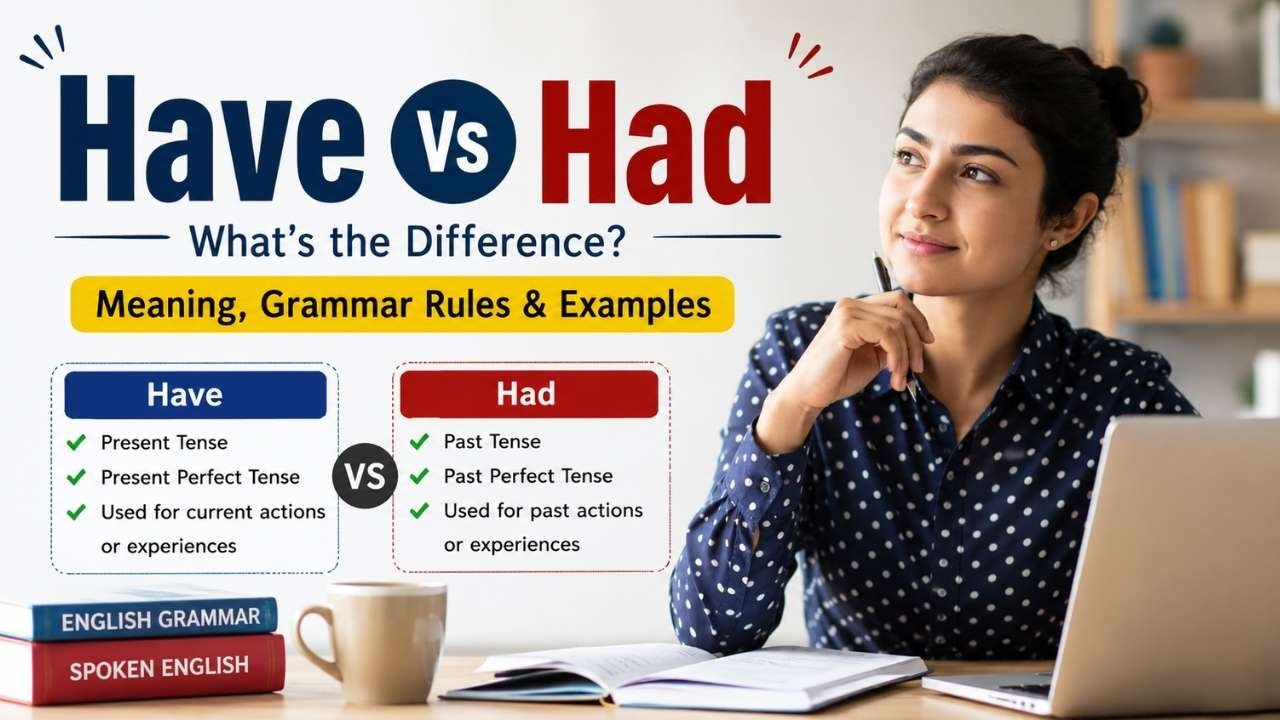
Choosing between have vs had can be confusing, especially if you’re learning English grammar. Although both words come from the same verb, they are used in different verb tenses and situations.
Understanding the difference between have and had will help you write more clearly and speak with confidence. In this guide, you’ll learn when to use have and had, the correct use of have and had, and how they work in everyday sentences.
We’ll explain the grammar rules for have and had in simple words, share plenty of have vs had examples, and point out common mistakes to avoid. Whether you’re a student, an ESL learner, or simply improving your writing, this Have Vs Had guide will make the topic easy to understand with clear explanations, practical tips, and real-life examples.
Quick Answer
The difference between have and had is based on time. Have is used for the present tense and present perfect tense, while had is the past tense and also forms the past perfect tense. Knowing when to use have and had helps you build correct sentences, avoid grammar mistakes, and communicate more clearly in both speaking and writing.
Have vs Had at a Glance (Comparison Table)
| Feature | Have | Had |
| Verb Tense | Present tense | Past tense |
| Perfect Tense | Used in the present perfect tense | Used in the past perfect tense |
| Meaning | Shows something you own, experience, or do now | Shows something you owned or experienced in the past |
| Common Use | Present situations and ongoing experiences | Past situations and actions completed before another past event |
| Example | I have a new laptop. | I had a bicycle when I was a child. |
| Helping Verb | Forms the present perfect (e.g., have finished) | Forms the past perfect (e.g., had finished) |
| Time Reference | Present or continuing | Past or earlier past |
| Question Example | Have you finished your homework? | Had you finished before dinner? |
What Does “Have” Mean?
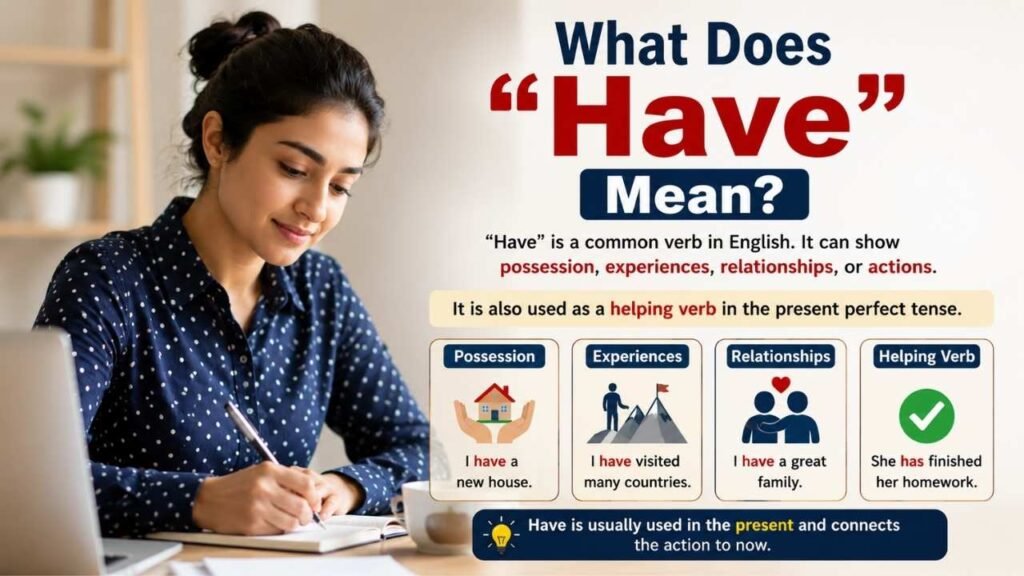
Have is one of the most common verbs in English grammar. It mainly shows possession, but it can also describe experiences, relationships, or actions. In addition, have works as a helping verb to form the present perfect tense.
For example, I have completed my homework shows an action that happened in the past but is still important now. Knowing when to use have and had begins with understanding that have usually refers to the present.
You will often see it with the subjects I, you, we, and they. Learning the correct use of have and had makes your writing clearer and helps you avoid common grammar mistakes in everyday conversations and formal writing.
What Does “Had” Mean?
Had is the past tense of have and is also used as a helping verb in the past perfect tense. It describes something you owned, experienced, or completed before another event in the past.
For example, She had left before the meeting started shows that one action happened earlier than another. Understanding have vs had in English grammar becomes much easier when you remember that had always points to the past.
It can be used with all subjects, including I, you, he, she, we, and they. If you often wonder have or had—which is correct, think about the time of the action. If it happened before now, had is usually the right choice.
Key Differences Between Have and Had
The difference between have and had is mainly about time. Have is used for the present tense and present perfect, while had is used for the past tense and past perfect. Another difference is their purpose.
Have talks about things that are true now or experiences connected to the present. Had talks about things that were true in the past or actions completed before another past event. Compare these examples: I have a car and I had a car five years ago.
Learning these grammar rules for have and had helps you choose the right verb in every sentence. If you enjoy learning grammar differences, you may also like our guides on Business vs Busyness and Freshman vs Freshmen, which explain other commonly confused words.
When Should You Use “Have”?
Use have when talking about the present or experiences that still matter now. It is commonly used with I, you, we, and they. You can use have to show ownership, such as I have a laptop, or to describe experiences, like We have many happy memories.
It is also a helping verb in the present perfect tense, as in They have finished the project. If you are learning how to use have and had, remember that have connects the action to the present. These have vs had examples make the rule easier to understand. Using have correctly will improve your speaking, writing, and overall confidence in English grammar.
When Should You Use “Had”?
Use had when talking about something that happened in the past. It shows that you owned, experienced, or completed something before another past event. For example, I had a pet when I was a child describes past ownership, while She had finished her homework before dinner uses the past perfect tense.
Unlike have, had works with all subjects, including I, you, he, she, we, and they. If you are unsure when to use have and had, remember this simple rule: use had only for past situations or earlier past actions. Following these grammar rules for have and had will help you build correct sentences and avoid common grammar mistakes.
Have vs Had in Different Tenses
Understanding have vs had becomes much easier when you see how they work in different verb tenses. Have is used in the simple present and present perfect tense, while had is used in the simple past and past perfect tense. For example, I have a new phone is in the present, and I have completed my work is in the present perfect.
On the other hand, I had a bike refers to the past, and I had completed my work before the meeting is in the past perfect. Learning these verb forms helps you understand the correct use of have and had and improves your confidence in both speaking and writing.
Have Had vs Had Had Explained
Many learners find have had and had had confusing, but the difference is simple. Have had is used in the present perfect tense to describe something that started in the past and is still connected to the present.
For example, I have had this watch for five years. Had had is used in the past perfect tense to show one past action happened before another. For example, She had had breakfast before she left for work.
Although had had may sound unusual, it is completely correct in English grammar. Understanding have had vs had had will help you use have and had in sentences more naturally and correctly.
Common Mistakes When Using Have and Had
One of the biggest mistakes learners make is using have when the sentence clearly talks about the past. For example, saying Yesterday I have a meeting is incorrect because the action happened before now.
The correct sentence is Yesterday I had a meeting. Another common mistake is using had instead of have in present situations, such as I had two brothers when they are still alive and the relationship continues.
The correct sentence is I have two brothers. If you often ask yourself have or had—which is correct, always think about the time of the action first. This simple habit makes the difference between have and had much easier to remember.
Easy Trick to Remember the Difference
A simple memory trick can help you choose between have and had every time. Think of have as the word for now, while had is the word for before. If the action is happening now or still matters today, use have. If the action happened in the past or before another past event, use had.
For example, I have a new computer talks about the present, while I had an old computer last year talks about the past. This easy rule makes when to use have and had much less confusing. Practice with more have vs had examples, and the correct choice will soon become natural.
Real-Life Examples of Have and Had
Seeing have and had in sentences makes the rules easier to understand. Here are some everyday examples. School: I have a science test today. I had a math test yesterday. Work: We have an important meeting this afternoon. We had a team meeting last Monday. Travel: They have visited three countries this year.
They had visited Paris before moving to Canada. Home: She has a beautiful garden. She had a small garden at her old house. These have vs had examples show how have connects to the present, while had refers to the past. Reading and practicing similar sentences is one of the best ways to master the correct use of have and had.
Practice Exercise: Choose Have or Had
Test your understanding of have vs had with these simple sentences. Fill in the blanks with the correct word.
- I ____ a new backpack for school.
- She ____ already finished the book before class started.
- We ____ dinner at a nice restaurant yesterday.
- They ____ lived in this city for many years.
- He ____ a bicycle when he was ten years old.
Answers:
- have
- had
- had
- have
- had
Practicing these have vs had exercises is a great way to remember the grammar rules for have and had. The more examples you complete, the easier it becomes to choose the correct verb naturally in everyday English.
FAQs
What is the difference between have and had?
Have is used for the present tense and present perfect tense, while had is used for the past tense and past perfect tense.
When should I use have?
Use have for present situations, possession, experiences, and actions connected to the present.
When should I use had?
Use had for past situations or actions that happened before another event in the past.
Is had the past tense of have?
Yes. Had is the past tense and past participle form of have.
Can have and had be used in the same sentence?
Yes. For example: I have had this laptop for three years. This sentence is in the present perfect tense.
Why do people say “had had”?
Had had is correct in the past perfect tense. It shows that one past action happened before another.
How can I remember the difference between have and had?
Remember this simple rule: Have = present, Had = past. Thinking about the time of the action will help you choose the correct word.
Conclusion
Understanding the difference between have and had is an important step toward improving your English grammar. While have is used for the present and the present perfect tense, had is used for the past and the past perfect tense.
The key is to focus on when the action happened. With the grammar rules for have and had, plenty of have vs had examples, and regular practice, choosing the correct verb becomes much easier.
Don’t worry if you make mistakes at first—every learner does. Keep reading, writing, and speaking in English, and soon the correct use of have and had will feel natural in both everyday conversations and formal writing.